
Spider Veins Around Ankles: Causes, Warning Signs, and Treatment Options
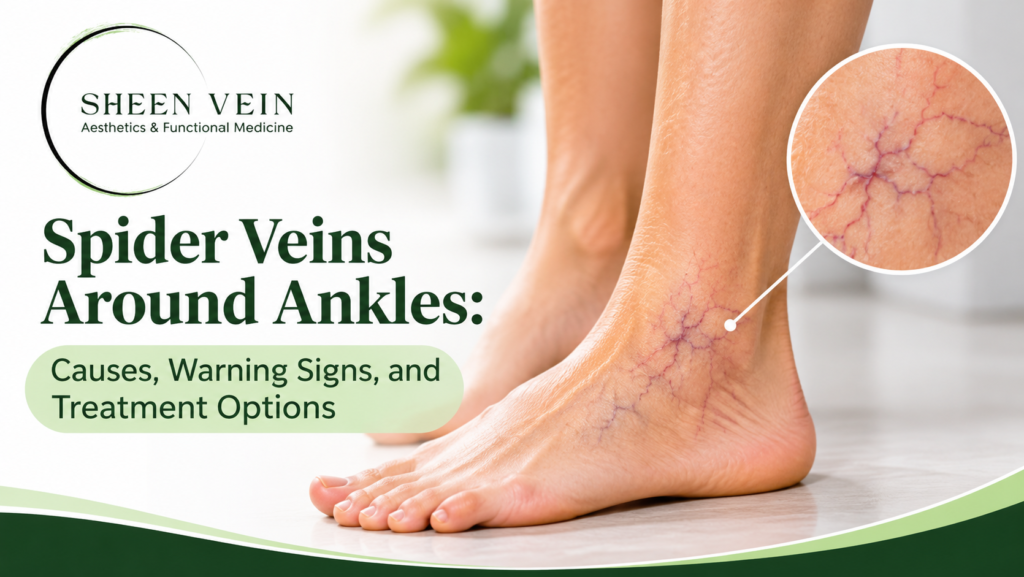
A cluster of fine red, blue, or purple lines near the ankle bone is easy to dismiss as a cosmetic quirk. Spider veins around ankles are among the most common vascular changes in adults, and in many cases they cause no symptoms at all. Sometimes, though, they are the visible edge of a deeper circulation issue, and the ankle is one of the first places where that shows up.
Below, you’ll find why the ankle area is so prone to these vessels, how to tell harmless spider veins from signs of venous disease, what treatment involves, and which habits may help.
Why the Ankles Are a Common Site
Blood has to travel upward from the feet to the heart, working against gravity. One-way valves inside leg veins keep it moving in the right direction. Pressure is highest in the lowest part of the leg, so the ankles and feet bear the greatest load, especially when you spend long stretches standing or sitting.
When pressure builds or valves weaken, small superficial veins can widen and become visible. Those fine, web-like vessels are spider veins, known medically as telangiectasias. A related pattern is a fan of tiny veins on the inner ankle, sometimes called ankle flare or corona phlebectatica. Some clinicians view this fan as an early sign that the veins above it are under strain, so it is worth paying attention to.
Common Risk Factors
Several factors tend to overlap:
- Family history. If your parents or siblings have spider or varicose veins, you are more likely to develop them.
- Hormones. Pregnancy, hormonal birth control, and menopause-related changes are associated with vein changes in many women.
- Prolonged standing or sitting. Jobs such as teaching, nursing, retail, and long-haul driving keep blood pooling in the lower legs.
- Excess weight. Additional body weight increases pressure on leg veins.
- Age. Vein walls and valves can lose function over time.
- Previous leg injury or clotting history. Past trauma or a deep vein thrombosis can alter circulation.
Having one or more of these does not guarantee you will develop visible veins, and some people with no obvious risk factors get them anyway.
Cosmetic Concern or Sign of Venous Insufficiency?
Isolated spider veins with no other symptoms are usually a cosmetic matter. The more important question is whether deeper veins are also failing, a condition called chronic venous insufficiency. Spider veins can occur on their own, but they can also appear alongside larger vein problems.
Pay attention if you notice any of the following near the ankles and lower legs:
- Aching, heaviness, or throbbing that worsens by evening
- Swelling that improves overnight or with leg elevation
- Itching, burning, or restless legs
- Brownish discoloration of the skin around the ankle
- Skin that looks tight, shiny, or thickened
- Bulging, ropelike veins elsewhere in the leg
Open sores near the ankle, sudden one-sided swelling, warmth, or leg pain should be evaluated promptly, since they can indicate a more serious problem such as a blood clot. Sudden shortness of breath or chest pain is an emergency.
What an Evaluation Looks Like
A vascular or vein-focused clinician typically starts with your history and a physical exam of both legs, often while you are standing. If symptoms or the pattern of veins suggest underlying disease, a duplex ultrasound is the standard test. It uses sound waves to show blood flow direction and valve function without radiation or needles.
This step matters because treating the visible veins alone can bring disappointing results if a feeder vein higher up is driving the problem. The vessels often return unless the source is addressed.
Treatment Options for Ankle Spider Veins
Many people choose no treatment, which is a reasonable decision when veins are painless and the exam shows no underlying disease. For those who want them addressed, there are established methods.
Sclerotherapy. A solution is injected into the vein, irritating the lining so the vessel closes and is gradually absorbed. It is a long-standing option for spider veins. Ultrasound-guided foam sclerotherapy uses imaging to place a foam form of the medication into veins that cannot be seen or targeted easily from the surface.
Laser or light-based treatment. Energy delivered through the skin heats the vessel so it collapses. It may suit very fine veins, though ankles can be harder to treat than other areas because of skin thickness and the vessels’ small caliber.
Treating underlying reflux first. When ultrasound shows a failing larger vein, procedures such as endovenous laser treatment (EVLT) may be discussed to close it before or alongside treating the surface veins. Whether that is appropriate depends entirely on test findings.
Clinics focused on vein health, such as Sheen Vein Aesthetics & Functional Medicine in St. Louis, offer treatments across this range, which allows the method to be matched to what an exam and imaging actually show.
Side effects can include temporary redness, bruising, itching, swelling, skin discoloration, or tiny new veins. Compression stockings are often recommended afterward, and walking is typically encouraged while strenuous exercise may be limited for a short period. Several sessions are common, and new veins can develop later, so results should be viewed as improvement rather than a permanent cure. Your provider can explain what is realistic for you.
Daily Habits That May Support Leg Circulation
Lifestyle changes will not remove existing spider veins, but they may ease symptoms and reduce strain:
- Move regularly. Walk, flex your ankles, or change position every 30 to 60 minutes if you sit or stand for work.
- Elevate your legs above heart level for short periods at the end of the day.
- Ask your clinician whether graded compression socks would suit you, since fit and strength matter.
- Maintain a healthy weight and stay active.
- Avoid tight garments that restrict circulation at the waist or thighs.
These steps are supportive. They are not a replacement for an evaluation if you have symptoms.
Knowing When to Get Them Checked
Spider veins around the ankles are often harmless, but the ankle is also where early venous disease tends to announce itself. Veins that look the same year after year and cause no discomfort can simply be monitored. New aching, swelling, skin changes, or a fan of veins that is spreading are good reasons to book an exam with a clinician who can look at the veins above the surface, not only the ones you can see.

