
Professional Paver Installation Services in West Hartford
A driveway can look perfectly fine from the street and still have drainage or base problems underneath. In West Hartford, changing seasons, winter freeze-thaw cycles, snow, ice, and spring moisture can put considerable stress on outdoor surfaces. That is why Paver Installation Services should be planned around the site, not just the paver style. Surmount Contractors shares this perspective from the standpoint of building outdoor surfaces that need to perform through Connecticut weather.
What Paver Installation Services Actually Include
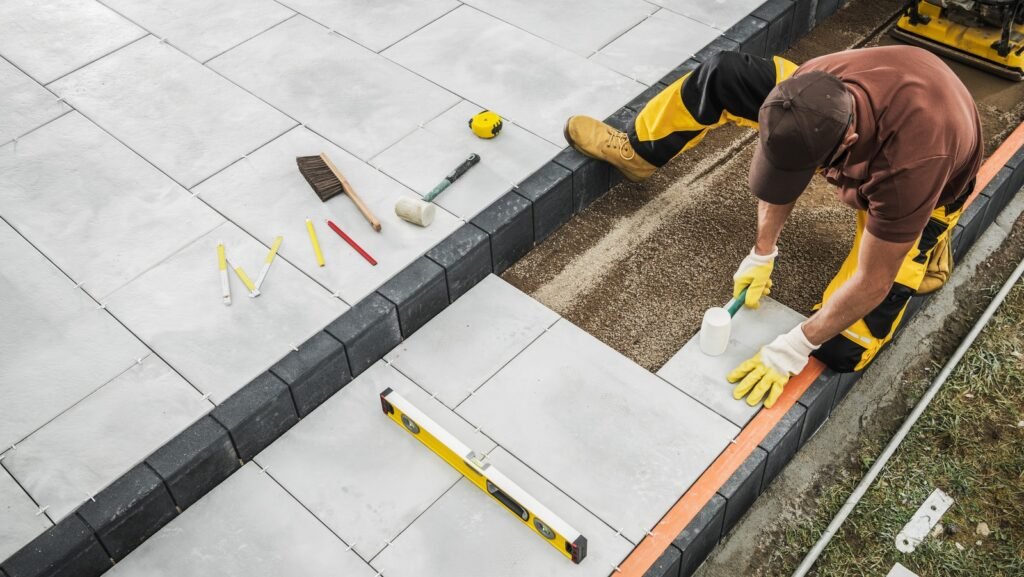
Paver installation is the construction of a finished outdoor surface using individual concrete, clay, or natural stone units set over a properly prepared base. Depending on the project, the work can include excavation, grading, compacted aggregate, bedding material, edge restraints, paver placement, joint sand, compaction, and drainage adjustments.
The visible pavers are only one part of the system. A driveway, walkway, or patio can have attractive materials on top and still fail prematurely if the base is unstable or water has nowhere to go.
For residential properties, pavers can be used for front walkways, entry paths, patios, pool surrounds, garden paths, steps, and driveways. Their modular construction also offers a practical advantage over a single slab: individual units can often be removed and reset if access to an underground utility or localized repair becomes necessary.
In West Hartford, we’ve noticed that most homeowners initially concentrate on color, pattern, and border design. Those choices matter, but site preparation usually has a greater effect on long-term performance.
A proper installation begins with evaluating the existing ground. Soil type, slope, existing pavement, drainage patterns, tree roots, and the relationship between the proposed surface and the house all influence the installation plan.
For homeowners comparing Interlocking pavers contractors in West Hartford CT, ask what they plan to do beneath the surface. A detailed answer should cover excavation depth, aggregate thickness, compaction, edge restraint, slope, and joint treatment rather than focusing only on the paver brand.
The Real Challenge in West Hartford
Connecticut weather is one of the biggest considerations for hardscape projects in West Hartford. Moisture can enter joints and surrounding soil, while freezing temperatures can cause trapped water to expand. Repeated freeze-thaw movement can contribute to settlement, shifting, cracked edges, and uneven surfaces when installation or drainage is poorly handled.
A client in West Hartford reached out after noticing that a section of an older patio had begun to sink near the edge of the yard. The pavers themselves were still usable, but the underlying area had settled and no longer drained properly. Instead of replacing every paver, the affected section could be assessed for removal, base correction, and resetting.
That example raises a question homeowners often hesitate to ask: Does an uneven paver surface always need to be completely rebuilt? Not necessarily. If the pavers are in good condition and the underlying problem is localized, lifting and resetting sections may make more sense than starting from scratch.
Current West Hartford-area listings show strong demand for paving, driveway, masonry, and patio work, with local providers offering different combinations of these services. The less obvious part of the decision is determining whether the contractor is diagnosing the ground conditions or simply selling a surface installation.
A good installation also considers nearby trees. Roots can lift surfaces over time, while removing or disturbing established trees may create an entirely different property-management issue. The best layout accounts for these conditions before excavation begins.
How Surmount Contractors Approaches It Differently
Surmount Contractors approaches a paver project by looking at the entire outdoor area rather than treating the pavers as an isolated finish. The existing grade, drainage, access, intended use, surrounding structures, and desired layout all help determine how the project should be built.
Edge restraints are another detail that should not be overlooked. They help keep pavers from spreading outward under repeated use and seasonal movement. Joint material also plays a role in keeping individual units stable.
The surface needs an appropriate pitch so rainwater can move away from structures. This is particularly useful in West Hartford properties where snowmelt and spring rainfall can expose weaknesses in grading.
Competitor pages commonly highlight attractive finished patios, walkways, and paver choices, but the less glamorous installation stages often receive much less attention. Local masonry and landscaping providers do advertise patios, walkways, paver installations, and outdoor living projects, yet homeowners still need to ask how the underlying base and drainage will be handled.
That is where an experienced contractor should be willing to explain the construction details in plain language. A beautiful rendering is useful, but a clear explanation of excavation, base preparation, drainage, compaction, and edge restraint tells you much more about how the finished surface is expected to perform.
For a patio, Paver patio contractors should also discuss the transition between the new surface and the house. Door thresholds, basement entrances, steps, retaining walls, and existing concrete all need proper elevation planning.
Practical Tips: What to Know Before You Decide
Start by deciding how the space will actually be used. A patio designed for outdoor dining has different requirements from a driveway carrying SUVs every day. A walkway may prioritize comfortable foot traffic and transitions, while a driveway needs a stronger structural foundation.
Working with clients in West Hartford, our team found that homeowners often get several quotes based mainly on total price. A better comparison is to place the estimates side by side and check what each contractor has included.
Look for details such as:
- Excavation and removal of unsuitable material
- Aggregate base and stated installation depth
- Compaction methods
- Drainage and finished grade
- Edge restraints
- Joint material
- Paver thickness and type
- Cleanup and disposal
- Warranty terms
- Repair procedures if settlement occurs
A Driveway paver installation project should receive particular attention to the existing driveway grade and where water will move after completion. A contractor who only measures the surface area may miss a drainage problem that becomes obvious after the first major storm.
For patios, furniture placement should be considered before finalizing the shape. Leave enough room for chairs to move comfortably and account for steps, doors, grills, retaining walls, and landscaping.
Cost deserves the same practical approach. The final price can change substantially based on excavation, demolition, grading, drainage corrections, material choice, site access, project size, and labor. Two properties with the same square footage can require very different amounts of preparation.
A low bid may look attractive until you discover that excavation, base material, disposal, or drainage work is excluded. Ask each contractor to explain what the price covers rather than comparing one number against another.
Build the Base Right Before Choosing the Finish
A paver project should be judged by more than the finished pattern. In West Hartford, proper excavation, drainage, compaction, and seasonal planning can make a greater difference than choosing between two similar colors. If you’re considering paver installation in West Hartford, CT, Surmount Contractors can assess the site and help you determine the right scope before construction begins.
4. FAQs
1. How much does paver installation cost in West Hartford, CT?
Paver installation costs vary according to square footage, paver material, excavation depth, base requirements, demolition, grading, drainage, and site access. Driveways generally require more structural preparation than patios. Get itemized estimates that show preparation and materials separately so you can compare proposals based on the actual work included.
2. How long does a paver driveway or patio installation take?
A small, straightforward patio may take several days, while a larger driveway or complex hardscape can take longer. Weather, excavation, drainage corrections, material availability, and site access all affect scheduling. Connecticut’s seasonal conditions can also influence the practical installation window for outdoor construction projects.
3. Can pavers be installed over an existing concrete patio or driveway?
Sometimes, but it depends on the concrete’s condition, elevation, drainage, cracking, and available height. Installing directly over a failing surface can preserve the underlying problem. A contractor should inspect the existing slab and determine whether it can support the proposed system or should be removed first.
4. How do I know if a paver contractor is trustworthy?
Look for a written scope, proof of insurance, clear payment terms, recent project examples, independent reviews, and specific answers about excavation and base preparation. A trustworthy contractor should explain potential site problems before construction starts rather than promising a fixed result without inspecting the property.
5. Are interlocking pavers a good choice for Connecticut driveways?
They can be a strong choice when the system is properly designed and installed. Individual units can be removed and reset for certain repairs, which is useful around utility access or localized settlement. The performance still depends heavily on the underlying base, drainage, edge restraint, and installation quality.
