
Physical Activity for Mental Health: How Exercise Supports Wellbeing
Physical Activity for Mental Health: How Exercise Supports Wellbeing
Physical activity is well known for supporting physical fitness, heart health, and healthy weight management, but its benefits extend far beyond the body. Regular movement can also support emotional and psychological wellbeing, improve mood, reduce feelings of anxiety, and help people manage stress. For many people, physical activity can be a practical part of a healthy lifestyle that supports both physical and mental health.
The connection between physical activity and mental health is not limited to structured workouts. Walking, cycling, swimming, dancing, playing sports, doing household tasks, or simply spending less time sitting can all contribute to a more active lifestyle. Even small amounts of movement can be useful, particularly for people who are currently inactive.
How Does Physical Activity Improve Mental Health?
Physical activity can affect mental wellbeing through several overlapping pathways. Movement can provide a temporary break from stressful thoughts, support better sleep, increase opportunities for social connection, and contribute to changes in mood and overall wellbeing.
The effects are not identical for everyone, and exercise should not be viewed as a replacement for professional mental health care. However, evidence from major health organizations supports regular physical activity as one component of a healthy lifestyle and, in some circumstances, as part of support for mental health conditions.
Physical Activity Can Improve Mood
One of the most noticeable benefits of physical activity for mental health is its potential effect on mood. Moving your body can help you feel more energized and provide a positive change of activity when you are feeling tense, tired, or mentally drained.
The National Institute of Mental Health notes that regular exercise can support mental health and that even activities such as a daily walk may help boost mood. Small amounts of activity can also add up, so people do not necessarily need to complete one long workout to become more active.
Physical Activity Can Help Manage Stress
Stress is a normal response to challenging situations, but persistent stress can affect both mental and physical wellbeing. Physical activity can provide an opportunity to shift attention away from stressful situations while engaging the body in purposeful movement.
A walk outdoors, a bike ride, swimming session, or strength workout may create a useful break from work, study, or other daily pressures. Physical activity also forms part of broader healthy lifestyle habits that can support emotional wellbeing.
Physical Activity and Anxiety
Research and health guidance also support a relationship between physical activity and anxiety. Regular movement may help reduce feelings of anxiety and can be part of a broader approach to managing symptoms.
The World Health Organization recommends structured physical exercise as an option to consider for adults with generalized anxiety disorder or panic disorder, although the recommendation is conditional and the certainty of evidence is rated very low. Exercise therefore should not be presented as a universal treatment or substitute for appropriate professional care.
Physical Activity and Depression
Physical activity may also have a role in supporting people experiencing depression. The WHO recommends that physical activity be encouraged as part of treatment for adults with depressive episodes or disorders who have inactive lifestyles. For moderate or severe depression, physical activity may be considered alongside established treatments such as antidepressants or structured psychological therapies.
This distinction is important. Exercise can be supportive, but depression is a medical condition that may require professional assessment and treatment.
Why Is Physical Activity Good for Mental Health?
The benefits of physical activity for mental health are connected to more than simply burning calories or improving physical fitness. Regular movement can influence several aspects of everyday life that are closely connected to mental wellbeing.
Better Sleep
Physical activity can support healthier sleep patterns. The CDC reports that physical activity can improve sleep quality, while regular activity is also associated with broader brain and mental health benefits.
Better sleep can make it easier to manage everyday stress and maintain energy during the day. In turn, having enough energy may make it easier to stay physically active, creating a useful cycle of healthy habits.
More Energy and Daily Function
Being physically active can support physical fitness and help people function better in everyday life. Regular activity may make routine tasks feel easier as strength, endurance, and cardiovascular fitness improve.
These physical changes can also support psychological wellbeing by helping people remain engaged with work, hobbies, social activities, and daily responsibilities.
Greater Sense of Routine
A consistent exercise routine can provide structure to the day or week. Having a regular time for walking, strength training, cycling, swimming, or another activity can turn movement into a sustainable habit rather than something that happens only when motivation is high.
A healthy routine does not have to involve intense workouts. Consistency and choosing activities that fit your lifestyle can make staying active more realistic.
Social Connection
Some forms of physical activity naturally involve other people. Group classes, team sports, walking with friends, recreational activities, and community exercise programs can create opportunities for social interaction.
Social connection is another important part of mental wellbeing. For some people, exercising with others can make physical activity more enjoyable and easier to maintain.
What Are the Mental Health Benefits of Physical Activity?
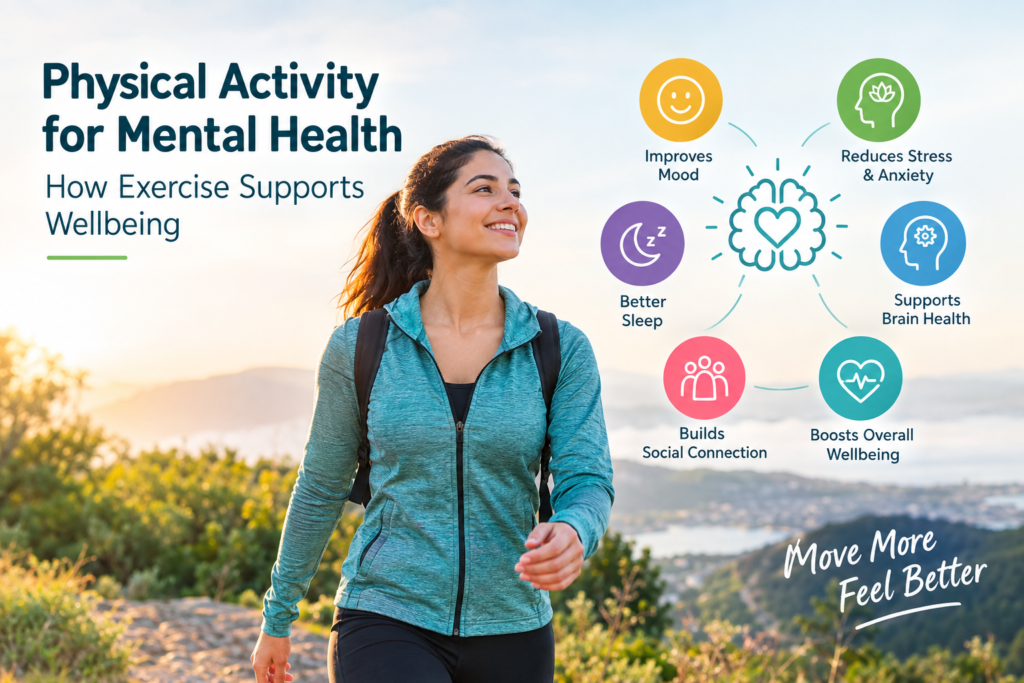
The potential benefits of physical activity include several areas of mental and emotional wellbeing:
- Improved mood
- Reduced short-term feelings of anxiety
- Better sleep
- Support for stress management
- Greater opportunities for social connection
- Support for overall wellbeing
- Potential reduction in the risk of depression
- Support for cognitive and brain health
The CDC reports that a single session of moderate-to-vigorous physical activity can provide immediate benefits, including reduced short-term feelings of anxiety in adults, while regular physical activity is associated with a lower risk of depression and better sleep.
The WHO similarly reports that regular physical activity can reduce symptoms of depression and anxiety, enhance brain health, and improve overall wellbeing.
How Does Exercise Affect Mental Health?
Exercise can affect mental health through a combination of physical, behavioral, and social factors.
When you exercise, you are not only moving your muscles. You may also be changing what you are doing, where you are doing it, who you are with, and how you spend your attention. A walk outside can provide a change of environment. A group class can provide social interaction. Strength training can give you a structured activity with measurable progress.
These different experiences can work together to support mental wellbeing.
Physical activity can also support brain health. According to the CDC, regular physical activity can help maintain thinking, learning, and judgment skills as people age.
What Types of Physical Activity Can Support Mental Wellbeing?
There is no single form of exercise that everyone needs to follow. The most useful activity is often one that is appropriate for your abilities, enjoyable enough to repeat, and practical for your lifestyle.
Walking
Walking is one of the simplest ways to become more physically active. It requires little equipment and can be incorporated into everyday routines.
A short walk during a work break, after a meal, or in the evening can help reduce sedentary time while contributing to your overall activity level.
Aerobic Exercise
Activities such as cycling, swimming, jogging, dancing, and brisk walking increase cardiovascular activity. They can support physical fitness while also contributing to mental wellbeing.
Strength Training
Resistance exercises such as weightlifting, bodyweight exercises, and resistance-band workouts can improve muscular fitness. Strength training can also become a structured part of a regular exercise routine.
Recreational Activities
Sports, hiking, dancing, gardening, active games, and other recreational activities can make movement more enjoyable. Physical activity does not have to feel like a formal workout to count.
The WHO defines physical activity broadly, including movement during transportation, work, household tasks, recreation, sports, and exercise.
How Much Physical Activity Do You Need?
For adults, current U.S. physical activity guidance recommends 150 to 300 minutes of moderate-intensity aerobic activity per week, or 75 to 150 minutes of vigorous-intensity aerobic activity, or an equivalent combination. Adults should also perform muscle-strengthening activities on at least two days each week.
However, these targets should not discourage people who are currently inactive. The guidelines emphasize that some physical activity is better than none, and inactive people can start with smaller amounts and gradually increase their activity over time.
You can divide activity across the week in ways that fit your schedule. For example, several shorter walks may be more realistic than trying to complete one long workout.
How Can Physical Activity Become Part of a Healthy Routine?
Building a sustainable active lifestyle is often easier when you start with realistic habits.
Start Small
If you have been inactive, begin with an amount of movement that feels manageable. A short walk or a few minutes of light activity can be a starting point.
Choose Activities You Enjoy
You are more likely to continue an activity that fits your interests. Try walking, cycling, swimming, dancing, sports, strength training, or another activity that you genuinely enjoy.
Make Movement Part of Your Day
Look for opportunities to move during ordinary routines. Walking for transportation, taking the stairs, doing household tasks, or taking short movement breaks can all contribute to daily physical activity.
Build Consistency
A realistic exercise routine is usually more sustainable than an extremely demanding program that is difficult to maintain. Focus on gradually developing regular physical activity rather than expecting immediate results.
Can Physical Activity Replace Mental Health Treatment?
No. Physical activity can support mental health, but it should not automatically replace professional treatment.
People experiencing persistent depression, severe anxiety, significant changes in mood, or symptoms that interfere with daily life should consider speaking with a qualified healthcare professional. Exercise can sometimes be used alongside established treatments rather than instead of them. For depression and anxiety disorders, the WHO specifically recognizes circumstances in which physical activity may be used as part of a broader treatment approach.
If mental health symptoms are severe, worsening, or making it difficult to function, seeking professional support is more important than trying to manage the problem through exercise alone.
Physical Activity Supports Both Physical and Mental Health
The connection between physical activity and mental health is part of a larger relationship between physical and psychological wellbeing. Regular movement can support cardiovascular health, physical fitness, healthy weight management, sleep, brain health, mood, and overall wellbeing.
The WHO describes physical activity as beneficial for both body and mind, while the CDC reports immediate and long-term health benefits associated with regular activity.
You do not need to become an athlete to benefit. Walking more, sitting less, choosing enjoyable activities, and gradually building a consistent exercise routine can all be meaningful steps toward a more active lifestyle.
Frequently Asked Questions
How does physical activity improve mental health?
Physical activity can support mental health by helping manage stress, improving mood and sleep, reducing short-term feelings of anxiety, supporting brain health, and contributing to overall wellbeing. Its effects vary between individuals and should be considered alongside other healthy habits and appropriate professional care.
Does physical activity improve mood?
Yes. Physical activity can help improve mood, and the National Institute of Mental Health notes that regular exercise can support mood and mental health. Even activities such as walking can be useful.
How does physical activity help with stress?
Exercise can provide a healthy break from stressful situations and can become part of a regular stress-management routine. Activities such as walking, cycling, swimming, or strength training can also support sleep and general wellbeing.
Is exercise good for anxiety?
Exercise can help reduce anxiety symptoms for some people and may be included as part of a broader approach to anxiety management. However, people with an anxiety disorder should not assume exercise alone is sufficient treatment.
Can exercise help with depression?
Physical activity may help support people with depression, and the WHO recommends that physical activity be encouraged as part of treatment for adults with depressive episodes or disorders who have inactive lifestyles. Moderate or severe depression may require additional treatment such as psychotherapy or medication.
What is the best exercise for mental health?
There is no single best exercise for everyone. Walking, cycling, swimming, running, strength training, dancing, sports, and other activities can contribute to physical and mental wellbeing. The best option is one that is appropriate for your health and abilities and that you can perform consistently.
Do I need to exercise for a long time to benefit?
No. Some health benefits can occur with relatively small amounts of activity, and people who are inactive are encouraged to start with manageable amounts and gradually increase their activity.
Final Thoughts
Physical activity is more than a way to improve physical fitness. Regular movement can support mood, sleep, stress management, brain health, and overall mental wellbeing while also contributing to physical health.
Whether you choose a daily walk, strength training, cycling, swimming, recreational sports, or another form of movement, the goal is to find an activity that fits your life and build it into a sustainable routine. Starting small is still progress, and consistent physical activity can become an important part of a healthy lifestyle.
Physical activity is well known for supporting physical fitness, heart health, and healthy weight management, but its benefits extend far beyond the body. Regular movement can also support emotional and psychological wellbeing, improve mood, reduce feelings of anxiety, and help people manage stress. For many people, physical activity can be a practical part of a healthy lifestyle that supports both physical and mental health.
The connection between physical activity and mental health is not limited to structured workouts. Walking, cycling, swimming, dancing, playing sports, doing household tasks, or simply spending less time sitting can all contribute to a more active lifestyle. Even small amounts of movement can be useful, particularly for people who are currently inactive.
How Does Physical Activity Improve Mental Health?
Physical activity can affect mental wellbeing through several overlapping pathways. Movement can provide a temporary break from stressful thoughts, support better sleep, increase opportunities for social connection, and contribute to changes in mood and overall wellbeing.
The effects are not identical for everyone, and exercise should not be viewed as a replacement for professional mental health care. However, evidence from major health organizations supports regular physical activity as one component of a healthy lifestyle and, in some circumstances, as part of support for mental health conditions.
Physical Activity Can Improve Mood
One of the most noticeable benefits of physical activity for mental health is its potential effect on mood. Moving your body can help you feel more energized and provide a positive change of activity when you are feeling tense, tired, or mentally drained.
The National Institute of Mental Health notes that regular exercise can support mental health and that even activities such as a daily walk may help boost mood. Small amounts of activity can also add up, so people do not necessarily need to complete one long workout to become more active.
Physical Activity Can Help Manage Stress
Stress is a normal response to challenging situations, but persistent stress can affect both mental and physical wellbeing. Physical activity can provide an opportunity to shift attention away from stressful situations while engaging the body in purposeful movement.
A walk outdoors, a bike ride, swimming session, or strength workout may create a useful break from work, study, or other daily pressures. Physical activity also forms part of broader healthy lifestyle habits that can support emotional wellbeing.
Physical Activity and Anxiety
Research and health guidance also support a relationship between physical activity and anxiety. Regular movement may help reduce feelings of anxiety and can be part of a broader approach to managing symptoms.
The World Health Organization recommends structured physical exercise as an option to consider for adults with generalized anxiety disorder or panic disorder, although the recommendation is conditional and the certainty of evidence is rated very low. Exercise therefore should not be presented as a universal treatment or substitute for appropriate professional care.
Physical Activity and Depression
Physical activity may also have a role in supporting people experiencing depression. The WHO recommends that physical activity be encouraged as part of treatment for adults with depressive episodes or disorders who have inactive lifestyles. For moderate or severe depression, physical activity may be considered alongside established treatments such as antidepressants or structured psychological therapies.
This distinction is important. Exercise can be supportive, but depression is a medical condition that may require professional assessment and treatment.
Why Is Physical Activity Good for Mental Health?
The benefits of physical activity for mental health are connected to more than simply burning calories or improving physical fitness. Regular movement can influence several aspects of everyday life that are closely connected to mental wellbeing.
Better Sleep
Physical activity can support healthier sleep patterns. The CDC reports that physical activity can improve sleep quality, while regular activity is also associated with broader brain and mental health benefits.
Better sleep can make it easier to manage everyday stress and maintain energy during the day. In turn, having enough energy may make it easier to stay physically active, creating a useful cycle of healthy habits.
More Energy and Daily Function
Being physically active can support physical fitness and help people function better in everyday life. Regular activity may make routine tasks feel easier as strength, endurance, and cardiovascular fitness improve.
These physical changes can also support psychological wellbeing by helping people remain engaged with work, hobbies, social activities, and daily responsibilities.
Greater Sense of Routine
A consistent exercise routine can provide structure to the day or week. Having a regular time for walking, strength training, cycling, swimming, or another activity can turn movement into a sustainable habit rather than something that happens only when motivation is high.
A healthy routine does not have to involve intense workouts. Consistency and choosing activities that fit your lifestyle can make staying active more realistic.
Social Connection
Some forms of physical activity naturally involve other people. Group classes, team sports, walking with friends, recreational activities, and community exercise programs can create opportunities for social interaction.
Social connection is another important part of mental wellbeing. For some people, exercising with others can make physical activity more enjoyable and easier to maintain.
What Are the Mental Health Benefits of Physical Activity?
The potential benefits of physical activity include several areas of mental and emotional wellbeing:
- Improved mood
- Reduced short-term feelings of anxiety
- Better sleep
- Support for stress management
- Greater opportunities for social connection
- Support for overall wellbeing
- Potential reduction in the risk of depression
- Support for cognitive and brain health
The CDC reports that a single session of moderate-to-vigorous physical activity can provide immediate benefits, including reduced short-term feelings of anxiety in adults, while regular physical activity is associated with a lower risk of depression and better sleep.
The WHO similarly reports that regular physical activity can reduce symptoms of depression and anxiety, enhance brain health, and improve overall wellbeing.
How Does Exercise Affect Mental Health?
Exercise can affect mental health through a combination of physical, behavioral, and social factors.
When you exercise, you are not only moving your muscles. You may also be changing what you are doing, where you are doing it, who you are with, and how you spend your attention. A walk outside can provide a change of environment. A group class can provide social interaction. Strength training can give you a structured activity with measurable progress.
These different experiences can work together to support mental wellbeing.
Physical activity can also support brain health. According to the CDC, regular physical activity can help maintain thinking, learning, and judgment skills as people age.
What Types of Physical Activity Can Support Mental Wellbeing?
There is no single form of exercise that everyone needs to follow. The most useful activity is often one that is appropriate for your abilities, enjoyable enough to repeat, and practical for your lifestyle.
Walking
Walking is one of the simplest ways to become more physically active. It requires little equipment and can be incorporated into everyday routines.
A short walk during a work break, after a meal, or in the evening can help reduce sedentary time while contributing to your overall activity level.
Aerobic Exercise
Activities such as cycling, swimming, jogging, dancing, and brisk walking increase cardiovascular activity. They can support physical fitness while also contributing to mental wellbeing.
Strength Training
Resistance exercises such as weightlifting, bodyweight exercises, and resistance-band workouts can improve muscular fitness. Strength training can also become a structured part of a regular exercise routine.
Recreational Activities
Sports, hiking, dancing, gardening, active games, and other recreational activities can make movement more enjoyable. Physical activity does not have to feel like a formal workout to count.
The WHO defines physical activity broadly, including movement during transportation, work, household tasks, recreation, sports, and exercise.
How Much Physical Activity Do You Need?
For adults, current U.S. physical activity guidance recommends 150 to 300 minutes of moderate-intensity aerobic activity per week, or 75 to 150 minutes of vigorous-intensity aerobic activity, or an equivalent combination. Adults should also perform muscle-strengthening activities on at least two days each week.
However, these targets should not discourage people who are currently inactive. The guidelines emphasize that some physical activity is better than none, and inactive people can start with smaller amounts and gradually increase their activity over time.
You can divide activity across the week in ways that fit your schedule. For example, several shorter walks may be more realistic than trying to complete one long workout.
How Can Physical Activity Become Part of a Healthy Routine?
Building a sustainable active lifestyle is often easier when you start with realistic habits.
Start Small
If you have been inactive, begin with an amount of movement that feels manageable. A short walk or a few minutes of light activity can be a starting point.
Choose Activities You Enjoy
You are more likely to continue an activity that fits your interests. Try walking, cycling, swimming, dancing, sports, strength training, or another activity that you genuinely enjoy.
Make Movement Part of Your Day
Look for opportunities to move during ordinary routines. Walking for transportation, taking the stairs, doing household tasks, or taking short movement breaks can all contribute to daily physical activity.
Build Consistency
A realistic exercise routine is usually more sustainable than an extremely demanding program that is difficult to maintain. Focus on gradually developing regular physical activity rather than expecting immediate results.
Can Physical Activity Replace Mental Health Treatment?
No. Physical activity can support mental health, but it should not automatically replace professional treatment.
People experiencing persistent depression, severe anxiety, significant changes in mood, or symptoms that interfere with daily life should consider speaking with a qualified healthcare professional. Exercise can sometimes be used alongside established treatments rather than instead of them. For depression and anxiety disorders, the WHO specifically recognizes circumstances in which physical activity may be used as part of a broader treatment approach.
If mental health symptoms are severe, worsening, or making it difficult to function, seeking professional support is more important than trying to manage the problem through exercise alone.
Physical Activity Supports Both Physical and Mental Health
The connection between physical activity and mental health is part of a larger relationship between physical and psychological wellbeing. Regular movement can support cardiovascular health, physical fitness, healthy weight management, sleep, brain health, mood, and overall wellbeing.
The WHO describes physical activity as beneficial for both body and mind, while the CDC reports immediate and long-term health benefits associated with regular activity.
You do not need to become an athlete to benefit. Walking more, sitting less, choosing enjoyable activities, and gradually building a consistent exercise routine can all be meaningful steps toward a more active lifestyle.
Frequently Asked Questions
How does physical activity improve mental health?
Physical activity can support mental health by helping manage stress, improving mood and sleep, reducing short-term feelings of anxiety, supporting brain health, and contributing to overall wellbeing. Its effects vary between individuals and should be considered alongside other healthy habits and appropriate professional care.
Does physical activity improve mood?
Yes. Physical activity can help improve mood, and the National Institute of Mental Health notes that regular exercise can support mood and mental health. Even activities such as walking can be useful.
How does physical activity help with stress?
Exercise can provide a healthy break from stressful situations and can become part of a regular stress-management routine. Activities such as walking, cycling, swimming, or strength training can also support sleep and general wellbeing.
Is exercise good for anxiety?
Exercise can help reduce anxiety symptoms for some people and may be included as part of a broader approach to anxiety management. However, people with an anxiety disorder should not assume exercise alone is sufficient treatment.
Can exercise help with depression?
Physical activity may help support people with depression, and the WHO recommends that physical activity be encouraged as part of treatment for adults with depressive episodes or disorders who have inactive lifestyles. Moderate or severe depression may require additional treatment such as psychotherapy or medication.
What is the best exercise for mental health?
There is no single best exercise for everyone. Walking, cycling, swimming, running, strength training, dancing, sports, and other activities can contribute to physical and mental wellbeing. The best option is one that is appropriate for your health and abilities and that you can perform consistently.
Do I need to exercise for a long time to benefit?
No. Some health benefits can occur with relatively small amounts of activity, and people who are inactive are encouraged to start with manageable amounts and gradually increase their activity.
Final Thoughts
Physical activity is more than a way to improve physical fitness. Regular movement can support mood, sleep, stress management, brain health, and overall mental wellbeing while also contributing to physical health.
