
Persian Lamb Fur Jackets and Coats: The Vintage-Meets-2026 Style Guide
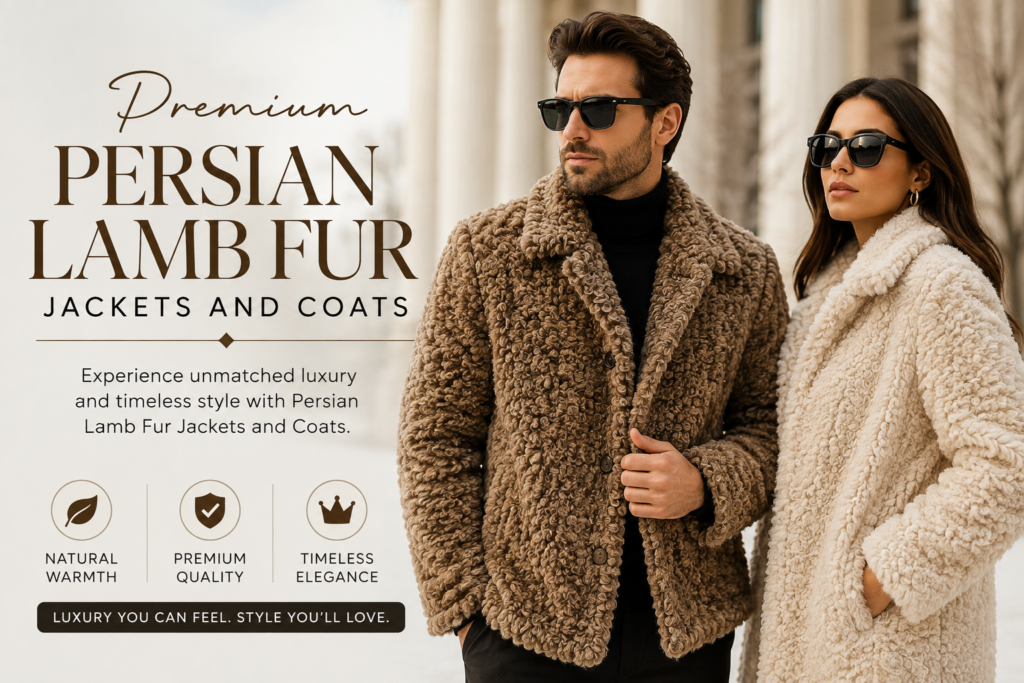
Persian Lamb Fur Jackets and Coats: The Coat That Always Had a Past Life
Somewhere in a cedar-scented closet, there is a coat that has outlived three decades of trends and still looks better than most things sold last month.
It has tight, glossy curls that catch the light like wet ink. The lining is a little worn at the cuff. There is a faint history in the pockets: a ticket stub, a stray button, maybe the ghost of someone’s perfume.
That coat is probably a Persian lamb coat. And right now, an entire generation is discovering what your grandmother already knew.
Why Everyone Is Suddenly Hunting for a Persian Lamb Coat
Fashion has a habit of circling back to what it once dismissed. For a while, the persian lamb fur coat belonged to a very specific image: the formal overcoat, the opera-night wrap, the sort of thing worn by people who never checked the weather app.
Then the algorithm got curious.
Vintage shoppers started posting their finds. Stylists began pairing curly-textured coats with baggy denim and battered boots. Music videos and street-style photographers did the rest. What once looked like heirloom formality now reads as effortless attitude.
The appeal is easy to explain. A persian lamb jacket has texture in a wardrobe full of flat surfaces. It photographs beautifully. It feels expensive without a single logo in sight.
In a season where people are tired of loud branding, a coat that speaks through its surface instead of its label feels almost radical.
What Persian Lamb Actually Is (and What It Isn’t)
A little vocabulary goes a long way here, because the names get tangled fast.
Persian lamb refers to the pelt of very young karakul lambs, known for a tight, flat, wavy curl pattern with a silky sheen. You will also hear it called persian lambskin, and shoppers often search for “persian fur coat” or “persian wool coat” when they mean the same thing.
Lambswool is a slightly different story. Strictly speaking, it is a soft knitting fiber from the first shearing of a young sheep. So a “persian lambswool coat” or “lambswool fur coat” listing is usually a loose, marketing-friendly label rather than a technical category. Worth knowing before you shop.
Mouton is sheepskin that has been sheared, straightened, and treated to resemble more expensive fur. A mouton lamb fur jacket tends to look denser and more uniform, with less of the liquid ripple you see in true Persian lamb. It is warm, hardy, and often far friendlier on the budget, which is why a mouton lamb coat remains a smart entry point.
Faux Persian lamb is the modern alternative. A well-made faux persian lamb coat can recreate the curl pattern surprisingly well, and it suits anyone who prefers to avoid animal fur altogether.
None of these is automatically “better.” They simply answer different questions about budget, ethics, and how long you want the piece to last.
The Silhouettes People Keep Reaching For
Not every lamb fur coat is cut from the same cloth, and the shape changes the mood completely. These are the styles that keep showing up in wardrobes right now.
The Cropped Persian Lamb Jacket
This is the easy one. A cropped lamb fur jacket sits at the hip or above, which makes it forgiving with trousers and high-waisted skirts. It reads younger, sharper, and more street-ready.
The Classic Knee-Length Coat
Long, structured, and quietly dramatic. The knee-length persian lamb coat is the one that turns a simple black outfit into a scene from a film you would want to watch twice.
The Collarless Minimalist
Clean neckline, hidden hooks, no fuss. It looks modern and slightly architectural, and it pairs nicely with a scarf.
The Men’s Persian Lamb Coat
The men’s persian lamb coat has made a real comeback, especially in slim, mid-thigh cuts with a notched collar. It brings texture to a menswear wardrobe that leans heavily on wool and denim, and it looks best when everything else stays simple.
The Vintage Find
Searches for “persian lamb coat, vintage” keep climbing for a reason. Older pieces often have heavier pelts, beautiful satin linings, and cuts you rarely see today. If you can find one that fits, it is a genuine head-turner.
How to Style a Persian Lamb Coat Without Looking Costumed
This is where most people hesitate. The fear is looking like you are dressed for another era. The fix is contrast.
Let the coat be the statement. Keep almost everything else understated and slightly rough around the edges.
- With denim: Straight-leg jeans and a plain white tee under a persian lamb jacket is the fastest way to make it feel current.
- With tailoring: Wear a knee-length coat over a charcoal suit or wide-leg trousers for evenings that need polish.
- With knitwear: A chunky rollneck in cream or grey softens the shine and makes the whole look feel lived-in.
- With boots: Chelsea boots, combat boots, or sleek knee-highs all work. Delicate heels can make the coat feel too formal.
- With minimal jewelry: Curls are already busy. Let one ring or a simple chain do the talking.
A simple rule helps: one bold texture per outfit. If the coat is the texture, everything else can be smooth.
Oversized vs. Fitted: Which One Deserves Your Closet Space?
Both work. They just tell different stories.
Oversized feels relaxed and borrowed-from-someone-cooler. It layers over hoodies and chunky knits and gives that slouchy, off-duty energy. The trade-off is bulk. Very dense pelts add real weight, so try it on and walk around before deciding.
Fitted feels sleek and deliberate. It flatters tailored outfits and suits smaller wardrobes where the coat needs to work with thinner layers underneath. The trade-off is range of movement, so check that you can reach forward comfortably.
If you are choosing only one, consider your daily layers. Wear a lot of sweaters? Go slightly roomier. Mostly shirts and light knits? A closer fit will look sharper.
Colors and Materials Worth Your Attention
Black remains the undisputed classic. It hides wear, suits every occasion, and lets the curl pattern do the visual work.
But there is more to explore:
- Espresso brown: Warmer and softer, it flatters almost every skin tone and looks wonderful with cream and camel.
- Deep grey: An underrated option that feels modern and slightly cool-toned.
- Cognac and tan: Bolder, and gorgeous with dark denim, but they show wear sooner.
- Ivory and cream: Dramatic and photogenic, though better for people who do not mind extra care.
On construction, pay attention to the details that quietly signal quality:
- The lining. A well-finished satin or quilted lining suggests a maker who cared about the inside too.
- The curl consistency. Real Persian lamb should have a natural, flowing ripple, not a rigid, uniform pattern.
- The seams. Look for even stitching and secure hooks or buttons.
- The flexibility. A good pelt bends and drapes. It should not feel stiff or brittle.
A Quick Note on Ethics and Care
It would be dishonest to skip this. Real fur is a conversation many shoppers want to have thoughtfully, and it is fair to weigh the choice for yourself. If animal fur does not sit right with you, a faux persian lamb coat lets you enjoy the look without the debate. Many vintage buyers choose secondhand precisely because it gives an existing piece another life rather than adding demand for new production.
For any coat you do own, care makes a difference:
- Store it on a wide, padded hanger in a breathable garment bag, never plastic.
- Keep it away from direct heat and humidity.
- If it gets wet, shake gently and let it dry naturally, away from radiators.
- Have it cleaned only by a specialist who handles fur or shearling.
Treat it well, and it can genuinely outlast the trend cycle.
Why Persian Lamb Coats Are Dominating 2026 Fashion
Three currents are pulling in the same direction.
First, there is a hunger for texture. After years of smooth, athletic fabrics, people want clothing that feels tactile and a little dramatic.
Second, there is the vintage effect. Secondhand shopping has stopped being a niche habit and become a first instinct. A coat that already carries decades of character has an obvious advantage.
Third, there is a return to quiet confidence. Not loud logos, not novelty. A well-cut lamb fur coat says something without shouting, and that is exactly the mood of the moment.
Add cinematic street-style photography, moody winter light, and a wardrobe philosophy built around fewer, better pieces, and the persian lamb jacket makes perfect sense as the season’s unlikely hero.
Where to Find Yours
If you are ready to look, browse thoughtfully and try things on in person when you can. Compare cuts, feel the weight, and check the linings before falling for a color.
Jacket Craze is a good place to start exploring persian lamb fur jackets and coats, from classic silhouettes to more contemporary takes, so you can compare styles and find a shape that actually suits your life.
Final Thoughts: A Coat Worth Growing Into
The best coats are not the ones that shout on day one. They are the ones that get better with time, the ones that start to feel like part of your own story.
A Persian lamb coat has always been that kind of piece. Now a new generation is putting its own spin on it, with sneakers, boots, denim, and plenty of attitude.
Pick one that feels like you. Wear it often. And one day, when someone asks where it came from, you might tell them it has a past life of its own.
Frequently Asked Questions
1. Is a Persian lamb coat warm enough for winter?
Yes, in most climates. The dense pelt traps heat well, and because the curls are close and flat, the coat feels lighter than its warmth suggests. For extreme cold, choose a longer length and layer a thin knit underneath.
2. What is the difference between Persian lamb and mouton?
Persian lamb comes from karakul lambs and has a tight, silky, rippled curl. Mouton is processed sheepskin that has been sheared and treated to look like fur. It is generally denser and more uniform, and often more affordable.
3. Can I buy a faux Persian lamb coat that still looks luxurious?
Absolutely. Look for a dense pile, a natural-looking curl pattern, and a properly finished lining. Good faux versions can capture the look convincingly and suit anyone who prefers to avoid animal fur.
