
Important Properties and Benefits of Quality Weed Mat
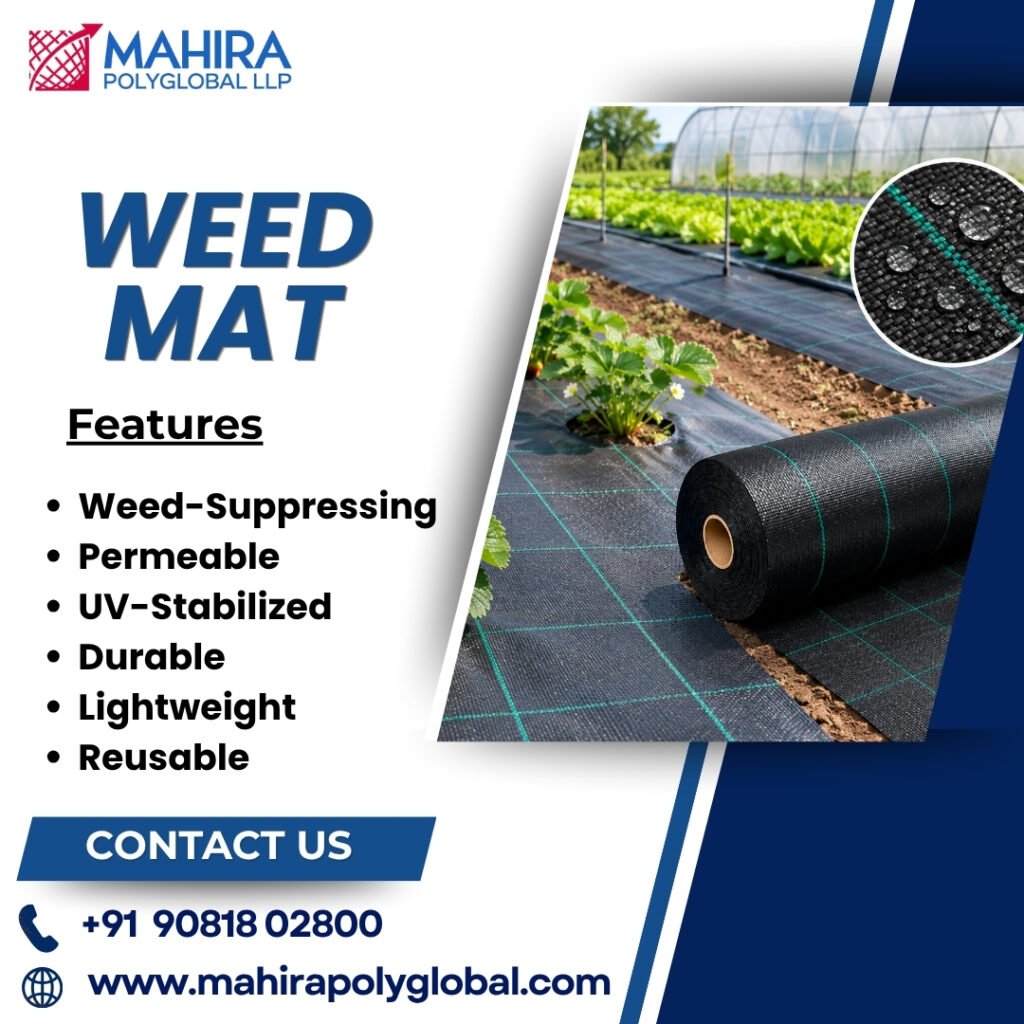
It is an efficient farming material that is used to prevent weed formation and encourage proper plant development. Weed Mat is usually made of woven polypropylene material. This material acts as a protective layer of the soil, blocking most of the sunlight from getting to the weed seeds. When sunlight cannot reach the seeds, most of the weeds are not able to grow and proliferate. As a result, Weed Mat proves to be an effective way to suppress weed proliferation on farms, gardens, nurseries, landscaping sites and greenhouses. It is produced in various sizes: width, length, thickness, colour and weight. Most often, the colour of Weed Mat is either black or green. One of the advantages of Weed Mat is its ability to reduce the need for regular manual removal of weeds.
Process of Manufacturing and Quality Standards
The process of manufacturing weed mat includes manufacturing process of polypropylene, manufacturing of tape, weaving, finishing, and quality checking process. Firstly, raw material of polypropylene is made into thin tapes through specific manufacturing processes. These tapes are then weaved together to make a robust fabric with the right GSM and dimension. Stabilizers for UV rays can also be included in the manufacturing process to increase its resistance to being outdoors. After the weaving process, there comes the inspection stage where checks are done for uniformity, strength, width, and finishes of the fabric. The product is then cut and rolled accordingly. An experienced Weed Mat Manufacturer India pays attention to the choice of raw materials, weaving process, dimension, and performance of the product. Customers can buy a weed mat from different fabrics’ weight, roll width, length, and color as per their requirements.
Weed Mat Specifications and Characteristics
The characteristics of Weed Mat depend on the quality of its fabric, thickness, weave, UV stability, and water permeability. Woven polypropylene is commonly utilized due to its strong tensile strength and durability that make it appropriate for outdoor use. The woven nature of this material allows for water permeability while preventing excessive sunlight exposure of the soil. Thus, the material maintains proper soil moisture under certain conditions while reducing the competition from other plants. One of the most important characteristics is the lightweight nature of the weed mat that simplifies transportation, cutting, handling, and installation. Also, many weed mats are stabilized with UV to increase their resistance to sunlight and prolong useful life outside.
Types and Usage of Weed Mat
There exist various types of Weed Mats to cater for different agricultural, commercial, and domestic purposes. The woven polypropylene Weed Mat is commonly employed in farms, nurseries, greenhouses, and landscaping due to its durability and high water permeability. Non-woven ground covers are also available for certain purposes where different types of fabrics would be preferred. Various types have pre-printed planting lines and squares to assist users to space plants well. These lines are important in nurseries and in commercial production grounds. In agriculture, the Weed Mat is applied to plantations of fruits, vegetables, and ornamental plants for weed reduction. Garden centres and nurseries employ Weed Mat in their plant containers for cleanliness.
The Advantages of Using Weed Mat for Gardens and Farms
Weed Mat provides quite a few useful advantages when used for gardening and farm purposes. Its principle of action lies in limiting weed development thanks to blocking their access to sunlight. Thus, it will save some of the time spent on weeding and allow farmers to concentrate on other important activities connected with crop production. In addition, many of the varieties of Weed Mat are permeable for water which facilitates irrigation and allows precipitation to reach the soil. In some cases, Weed Mat can help prevent the evaporation of water because of limited soil exposure to sunlight. One more useful advantage is improved gardening organization.
Methods of Installation and Maintenance
The installation of Weed Mat influences its effectiveness. First, before installation, the soil should be cleaned from existing weeds, stones, roots, and any sharp objects. After that, the surface must be levelled properly. Then, Weed Mat can be applied in a desired place and fastened by appropriate ground pins or landscape staples. Overlaps between adjacent pieces of the fabric should be sufficient to avoid the penetration of weeds in places where the weed mat is not applied. In case of planting purposes, small openings should be made only in the places required without unnecessary cutting. Edges of the fabric need to be carefully installed especially outdoors in windy places. In bigger agricultural projects, alignment of fabric will help to ensure planting rows and irrigation arrangements. Maintenance is rather easy but still requires some attention.
Demand for Weed Mat and Future Trends
The demand for Weed Mat continues to increase due to the need for efficient solutions for unwanted vegetation management. Modern farming requires the reduction of the necessity for human labour, the ability to manage water efficiently, and keeping cultivated areas organized. These needs led to the development of various types of agricultural ground-cover fabric. Customers who are interested in purchasing a Weed Mat Exporter usually pay attention to such factors as quality, roll size, GSM, UV stability, packaging, and reliable delivery. Foreign buyers may need additional technical information and special product specifications. There are improvements in fabric designs made by manufacturers in order to enhance the durability, water permeability, and outdoor resistance of their products.
Conclusion
Weed Mat is a viable ground covering solution that can manage weed growth and facilitate well-planned agricultural and gardening activities. The material is made of woven polypropylene; it is permeable to water, resistant to UV light and comes in various GSM. This makes it a perfect fit for use on farms, in nurseries, greenhouses and landscape design. Choosing the appropriate material entails paying due attention to its quality, GSM, size and other factors. Ground preparation, overlapping, securing and monitoring the condition of the material is just as crucial. Despite the inability to prevent weeds from growing in all cases, Weed Mat can save a lot of effort when used properly.
Frequently Asked Questions (FAQs)
1. What are the applications of Weed Mat?
Weed Mat is utilized in farm lands, gardens, nurseries, greenhouses, landscaping sites, and commercial plantation sites.
2. What type of material is commonly used for making Weed Mat?
Polypropylene woven is one of those materials used widely because of their toughness, durability, flexibility, and permeability.
3. Will water pass through Weed Mat?
Certainly! Because of the fabric structure of the product, it is ensured that water penetrates through the soil very easily, either through rainwater or irrigations.
4. How long will Weed Mat last?
There are various factors that can affect this, such as GSM of fabric, UV stabilizing, installation method, weather, and maintenance. Weed mat is highly durable when installed outdoor under UV stabilization.
5. Who is the largest supplier of Weed Mat?
Buyers may contact Mahira Polyglobal LLP for any queries related to the Weed Mat product line. It is important for the consumers to be sure about the GSM choice, fabric choice, UV protection, size of the roll, and pricing before buying it.

