
How to Buy a 2 CT Diamond Ring on Any Budget
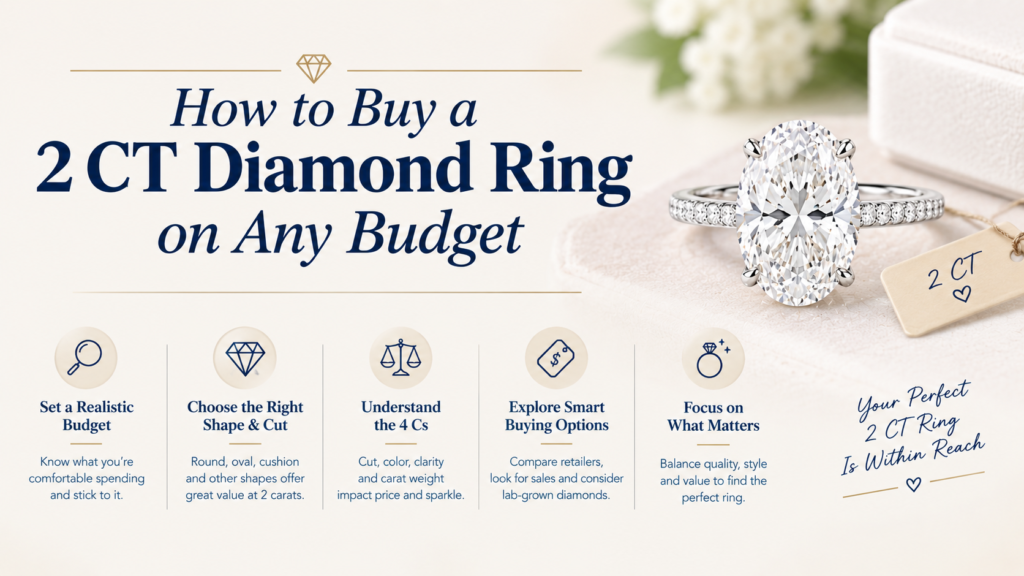
How to Buy a 2 CT Diamond Ring on Any Budget
A two-carat engagement ring can create a beautiful presence while giving buyers plenty of flexibility in shape, setting, diamond quality, and budget. However, carat weight is only one part of the buying decision. Two diamonds weighing the same can look noticeably different because of their proportions, shape, cut, and measurements. Understanding these differences can help you compare options more confidently and choose a ring that suits both your style and budget.
What to Know Before Buying a 2 CT Diamond Engagement Ring
Before purchasing a 2 ct diamond engagement ring, start by understanding what carat weight actually means. Carat measures the weight of a diamond rather than its exact visible size. A well-proportioned diamond may appear larger or more brilliant than another stone with the same weight.
Cut is especially important because it affects how efficiently the diamond reflects light. Color and clarity also influence appearance and price, but the highest grades are not always necessary for an attractive stone. Look for a combination that provides good visual appeal within your budget.
Certification is another consideration. An independent grading report can provide information about the diamond’s carat weight, measurements, color, clarity, and cut, making it easier to compare different stones.
How Much Does a 2 Carat Diamond Ring Cost?
If you are wondering how much does a 2 carat diamond ring costs, the answer depends on several factors. Diamond origin, shape, cut, color, clarity, certification, and setting can all influence the final price.
Natural diamonds generally command a higher price because they are formed naturally beneath the Earth’s surface. Lab-grown diamonds can provide similar physical and optical characteristics at a lower purchase price. Moissanite is another option for buyers primarily focused on appearance and budget.
For a natural two-carat diamond with a setting, prices can commonly range from approximately $8,000 to $28,000 or more, depending on specifications. Lab-grown alternatives can be considerably less expensive, while moissanite options may provide an even lower-cost route.
Instead of comparing price alone, consider the complete specification of each ring. A lower-priced diamond with poor proportions may not provide the appearance you expect.
Choosing a Women’s 2 Carat Diamond Ring by Shape
When selecting a women’s 2 carat diamond ring, diamond shape can significantly influence how large and distinctive the stone appears. Round, oval, emerald, radiant, and cushion shapes each create a different visual effect.
Round diamonds are known for their classic appearance and strong brilliance. Oval diamonds offer an elongated look that can make the finger appear longer. Emerald cuts emphasize clarity and step-cut facets, while radiant and cushion shapes combine distinctive outlines with lively sparkle.
Compare the actual measurements as well as carat weight. This gives you a better understanding of how much finger coverage the center stone will provide.
2 Ct Round Diamond Ring: A Classic Choice
A 2 ct round diamond ring remains a popular choice for shoppers seeking a traditional engagement-ring appearance. A well-proportioned round diamond of this weight is approximately 8.1 mm in diameter, although exact measurements vary.
Round diamonds can work with almost any setting, including solitaire, halo, pavé, cathedral, and three-stone designs. Their symmetrical shape also makes them relatively versatile when pairing an engagement ring with a wedding band.
If brilliance is your main priority, pay close attention to the cut grade and proportions rather than choosing solely according to carat weight.
2 Carat Rings: How Shape Changes Appearance
Different 2 carat rings can have very different visual appearances even when the center stones weigh exactly the same. Elongated shapes generally provide greater length across the finger, while square or near-square shapes create a broader appearance.
For example, an oval may look larger from above because of its elongated outline. An emerald cut can appear substantial while offering a more understated style because of its step-cut facets. Radiant and cushion diamonds provide other alternatives for buyers who want something between classic and contemporary.
2 Ct Engagement Rings: Choosing the Right Setting
The setting plays an important role when comparing 2 ct engagement rings. A solitaire focuses attention almost entirely on the center diamond and can create a clean, timeless appearance.
Halo settings surround the center stone with smaller diamonds, potentially increasing the overall visual impact. Pavé settings add sparkle along the band, while cathedral designs raise the center stone with supportive arches.
A hidden halo can add detail without dramatically changing the appearance from above. Three-stone designs create a broader arrangement across the finger and can carry symbolic meaning related to a couple’s past, present, and future.
Consider both appearance and practicality. A higher-profile setting may provide more visual prominence but can be more noticeable during everyday activities.
How to Compare a Two Carat Ring on a Budget
When comparing a two carat ring, establish your complete budget before selecting the center diamond. The ring price may include the diamond, setting, metal, side stones, certification, and customization.
Rather than automatically choosing the highest color or clarity grade, compare stones that look attractive to the eye. Small differences in grades can sometimes have a significant effect on price without producing an equally noticeable difference in appearance.
Should You Prioritize Cut, Color, or Clarity?
For many buyers, cut deserves particular attention because it directly influences brilliance and light performance. Color becomes more noticeable depending on the diamond shape and metal used for the setting.
Clarity refers to internal and external characteristics. A diamond does not necessarily need the highest clarity grade to appear clean to the naked eye. Comparing diamonds at different grades can help identify where your budget provides the most useful value.
How Diamond Proportions Affect Visible Size
Two diamonds with identical carat weights can have different measurements. Depth, table percentage, length-to-width ratio, and overall proportions influence how much of the stone is visible from above.
For this reason, do not evaluate a diamond only by its carat number. Look at the millimeter measurements and compare photographs or videos when available. This is particularly useful when comparing elongated shapes such as oval and emerald diamonds.
Natural vs. 2 Carat Diamond Ring Lab Grown Options
A 2 carat diamond ring lab grown option can be considered by shoppers who want to allocate more of their budget toward carat weight, color, clarity, or a more elaborate setting.
Lab-grown diamonds are diamonds with essentially the same chemical composition and crystal structure as natural diamonds, but they are produced using controlled technological processes rather than geological formation. Their lower market pricing can make larger sizes more accessible.
Natural diamonds remain a traditional choice for engagement jewelry, while lab-grown diamonds offer another route for buyers who prioritize specifications and budget flexibility.
KRK Jewels offers designs featuring both natural and lab-grown diamonds, so shoppers can compare different diamond origins while considering their preferred style and specifications.
Finding Affordable 2 Carat Engagement Rings
Finding affordable 2 carat engagement rings starts with deciding which features matter most to you. You might prioritize a particular shape, a higher cut grade, a specific metal, or a larger-looking stone.
Choosing a simpler setting can leave more of the budget available for the center diamond. Alternatively, selecting a lab-grown diamond may allow room for a more detailed setting while keeping the overall cost controlled.
Compare several diamonds with similar specifications rather than choosing the first option you find. Check measurements, grading information, setting materials, and the complete price before making a purchase.
Ways to Get More Value From Your Diamond Budget
Consider looking at several color and clarity combinations rather than restricting your search to the highest grades. Depending on the shape, some characteristics may be less noticeable to the unaided eye.
You can also compare different shapes. Elongated diamonds can provide substantial finger coverage, while a solitaire setting can keep the overall design simple and focused on the center stone.
If you are considering customization, ask for a complete quotation that includes the center diamond, setting, metal, side stones, certification, and other applicable costs.
What to Check Before Buying a 2 Ct Diamond Ring
Before buying a 2 ct diamond ring, review the diamond’s grading report and confirm that the listed carat weight and measurements match the product details.
Pay attention to:
- Cut and proportions: These influence brilliance and appearance.
- Color: Consider how the diamond looks in the selected metal.
- Clarity: Determine whether inclusions are visible without magnification.
- Measurements: Compare millimeter dimensions to understand visible size.
- Certification: Look for a recognized independent grading report.
- Setting: Consider security, height, comfort, and overall style.
- Metal: Compare available gold options and their durability.
- Return policy: Understand the terms before completing the purchase.
A detailed comparison helps ensure that you are evaluating the complete ring rather than focusing only on the carat number.
Is a 2 Carat Diamond Ring Right for You?
A 2 carat diamond ring offers noticeable presence, but whether it is the right choice depends on personal style, budget, lifestyle, and preferred proportions. Some buyers may prefer a classic round diamond, while others may favor an elongated oval or modern radiant shape.
The setting also changes the character of the ring. A minimalist solitaire creates a different impression from a halo, pavé, or three-stone design.
Take time to compare the complete specifications, view the diamond from different angles, and consider how the ring fits your everyday routine. A thoughtful buying process can help you find a design that balances size, appearance, quality, and cost.
FAQs
Is a Two Carat Diamond Ring Too Large for Everyday Wear?
Not necessarily. A two-carat center stone can be worn every day when paired with a secure and comfortable setting. The ring’s height, prong design, band width, and personal lifestyle can all affect everyday comfort.
What Is the Difference Between 2 CT Diamond Rings and 2ct Diamond Rings?
There is no difference in carat weight. 2 CT diamond rings and 2ct diamond rings are simply different ways of writing the same measurement. Both refer to diamonds weighing two carats.
Is a Two Carat Diamond Ring Worth Considering?
A two-carat diamond can be worth considering if its size, appearance, and price align with your preferences. Compare the diamond’s cut, measurements, color, clarity, origin, and setting rather than judging the ring by carat weight alone.
Are Lab-Grown Diamonds a Good Budget Option?
Lab-grown diamonds can provide a lower-cost alternative to natural diamonds with the same fundamental crystal structure and chemical composition. They can be useful for buyers who want to consider a larger stone or higher specifications within a fixed budget.
What Should I Check Before Buying a 2 Ct Diamond Ring?
Check the grading report, cut, color, clarity, measurements, diamond origin, setting, metal, return policy, warranty terms, and total price. These details provide a more complete picture of the purchase.
How Much Should I Budget for a 2 Carat Engagement Ring?
There is no universal budget because prices vary widely according to diamond origin, quality, shape, setting, and metal. Compare complete ring specifications within your preferred spending range rather than using carat weight alone to set a price.
Which Diamond Shape Looks Largest at Two Carats?
Elongated shapes such as oval can provide substantial finger coverage relative to their carat weight. However, visible size depends on the diamond’s actual measurements and proportions, so compare millimeter dimensions when evaluating different shapes.
