
How Mobile Technology Is Changing the Way Estate Agents Manage Property Sales
Introduction
Mobile CRM app technology is helping real estate professionals manage property enquiries, customer information, and sales activities while working away from the office. Estate agents regularly travel between property inspections, client meetings, viewings, and negotiations. During these activities, they may receive new enquiries or need to access important customer details without returning to their desks.
Traditional methods of managing property information can make this difficult. Paper notes, spreadsheets, and separate messaging applications may leave customer records scattered across different locations. A mobile-first approach allows agents to access relevant information, record updates, and organize their daily responsibilities more conveniently.
For modern property businesses, the goal is to connect field activities with the wider sales process so that every enquiry receives appropriate attention.
Managing Property Enquiries While on the Move
Capturing Information During Property Visits
Estate agents often gather valuable information during property inspections and client meetings. A seller might explain renovation plans, a buyer might clarify their budget, or a landlord might discuss the preferred rental terms.
If these details remain in handwritten notes or are stored on personal devices, other team members may struggle to access them when needed.
A mobile CRM allows agents to update customer records shortly after a conversation. They can record property requirements, add notes, and identify the next action while the information is still fresh.
This approach reduces dependence on memory and helps maintain more accurate records across the agency.
Responding to New Opportunities
A new property enquiry may arrive while an agent is travelling between appointments. Delayed responses can make it harder to maintain a conversation with an interested buyer or seller.
Mobile notifications help agents become aware of new enquiries without constantly checking their computers. Depending on the system and configuration, they can review lead details and arrange a suitable response.
Businesses should establish clear response responsibilities so that enquiries are not left unattended when an agent is busy, unavailable, or conducting a viewing.
Organizing Property Viewings More Effectively
Property viewings involve coordination between buyers, sellers, tenants, landlords, and agency staff. A single appointment may require confirming availability, sharing property details, and recording feedback afterward.
A structured customer management process can help agents keep track of these activities.
For example, an agent could record that a buyer has viewed a two-bedroom apartment, note their feedback, and schedule a follow-up conversation. If the buyer is not interested, the agent can update their preferences and focus on more suitable properties.
Maintaining these details helps agencies avoid repeatedly recommending properties that do not match a customer’s requirements.
It also gives colleagues useful context when another agent needs to continue the conversation.
Using a CRM for Estate Agents to Connect Fieldwork With Sales
A CRM for estate agents can connect customer records, property opportunities, communication histories, and follow-up activities in one organized workflow.
This becomes particularly useful when an agency has several representatives handling different locations or property categories. Instead of relying on separate personal records, the team can work from shared customer information and track each opportunity through its sales stages.
For example, a residential sales pipeline might include new enquiry, buyer qualification, property viewing, offer submitted, negotiation, and completion. Rental opportunities may require a different set of stages.
LastingSales offers estate agents features such as lead consolidation, custom data fields, sales pipelines, lead assignment, notes, and follow-up reminders. These capabilities help agencies organize customer information and monitor the progress of property opportunities.
Keeping Buyer and Seller Requirements Organized
Recording Preferences That Matter
Property searches involve several variables. Buyers may have a specific budget, preferred location, property size, number of bedrooms, or access requirements. Sellers may need guidance about listing their property and understanding the next steps in the sales process.
A centralized customer profile helps agents record these preferences rather than asking the same questions repeatedly.
Custom fields can be used to capture relevant information, while notes provide additional context about conversations and decisions.
This information supports more relevant recommendations and helps agents prepare before contacting a prospect.
Updating Requirements as Circumstances Change
Property requirements are not always fixed. A buyer might increase their budget, change their preferred location, or decide to consider a different property type.
Agents should update customer records whenever these changes become clear.
Accurate information helps the team understand which opportunities remain relevant and which prospects need a revised selection of properties.
Improving Team Coordination Across Different Locations
Real estate agencies may have representatives working in different neighbourhoods, branches, or property markets. Coordinating their activities becomes more challenging when customer information is not shared consistently.
A mobile-enabled CRM can help authorized team members access relevant records and update opportunity statuses as work progresses.
For instance, one agent may capture an enquiry, another may conduct a viewing, and a manager may handle the negotiation. A shared record helps each person understand previous interactions and outstanding tasks.
Lead assignment also makes responsibilities clearer by identifying who should manage a particular opportunity.
Agencies should establish consistent procedures for updating records so that the shared information remains useful and reliable.
Making Follow-Ups Part of the Daily Routine
A viewing does not always result in an immediate offer. Buyers may want to compare other properties, discuss financing, or consult family members before making a decision. Sellers may also need time to consider an agency’s recommendations.
Without a clear follow-up process, these opportunities can become inactive.
Mobile reminders can help agents remember to contact prospects after viewings, provide requested information, or check whether a seller wishes to proceed.
A useful follow-up should reflect the previous conversation. Instead of sending a generic message, the agent can refer to the property viewed, answer outstanding questions, or suggest alternatives that better match the customer’s requirements.
Recording the outcome also helps other team members understand the current position.
Connecting Marketing Enquiries With On-Site Activities
Property businesses frequently generate leads through online advertisements, website forms, property portals, referrals, and social media. Managing these enquiries separately from field activities can create gaps between marketing and sales.
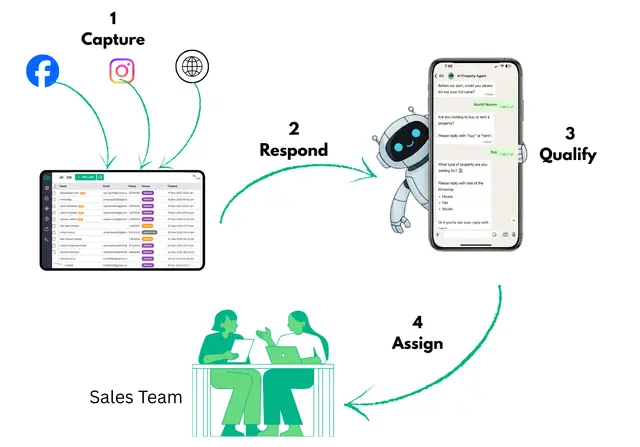
A connected workflow allows incoming leads to be organized, assigned to representatives, and tracked as they progress toward viewings and negotiations.
LastingSales supports lead consolidation from sources including Facebook Ads and websites, helping estate agencies bring enquiries into a centralized sales process.
Once an enquiry enters the system, the team can record customer requirements, assign responsibility, and plan the next step. This creates a clearer connection between digital marketing activity and real-world property sales.
Using Mobile Data to Improve Sales Decisions
Mobile access is not only about convenience. The information collected during daily activities can also help managers understand how their sales process performs.
An agency may review how many enquiries progress to viewings, how many viewings lead to offers, and which stages regularly experience delays.
If many buyers attend viewings but do not submit offers, the agency may need to examine property suitability, pricing expectations, or the quality of initial qualification.
If enquiries remain inactive before a viewing is arranged, the team may need to improve its response process or appointment coordination.
These observations help managers identify specific areas for improvement instead of relying solely on total enquiry numbers.
Protecting Customer Information During Mobile Work
Estate agents frequently handle personal contact details, financial preferences, property information, and private communications. Mobile access should therefore be supported by appropriate security practices.
Businesses should use authorized accounts, strong authentication where available, suitable device security, and access permissions based on job responsibilities. Employees should also follow company policies when using personal devices and handling customer information outside the office.
Keeping records in an approved business system can make information easier to manage than relying on scattered personal notes or unapproved applications.
Conclusion
Mobile technology can help estate agents connect property inspections, customer conversations, viewing feedback, and follow-up activities with a more organized sales process. By maintaining accurate customer records and making important information accessible to authorized team members, agencies can improve coordination while working across different locations.
Combining mobile access with structured pipelines, lead assignment, and timely reminders creates a practical foundation for managing property opportunities. The result is a more connected workflow that helps estate agents stay organized, respond to customer needs, and maintain continuity from the first enquiry to the final transaction.
