
HDPE T-Rib Liner Sheets for Durable Concrete Protection
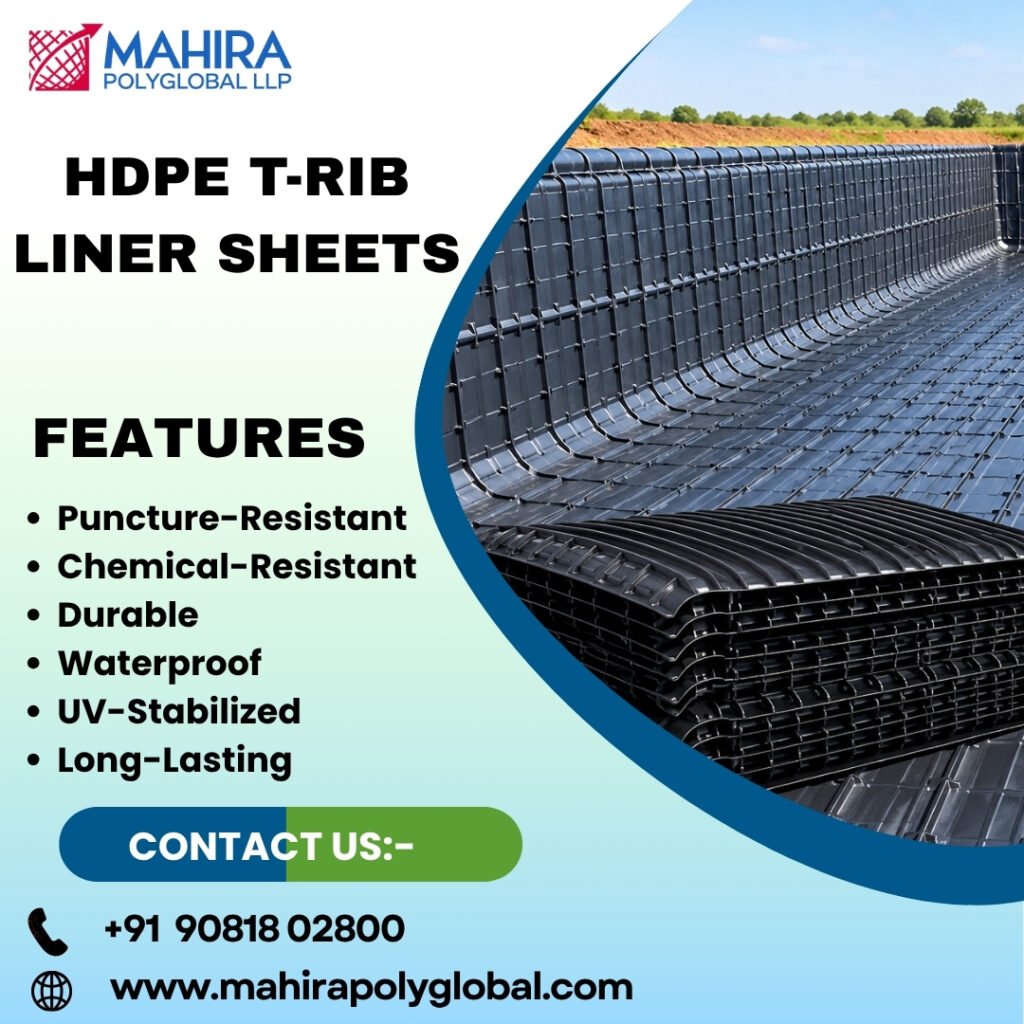
The HDPE T-Rib Liner Sheets represent linings that are specifically designed using the material known as High-Density Polyethylene (HDPE). The function of the mentioned sheets lies in providing protection as a liner in different concrete structures such as tanks, tunnels, water channels, waste water systems, and other industrial constructions. T-rib design of the sheets provides for creating a mechanical link between the concrete and liner during the installation process.This ensures that the liner will not move and provides reliable protection from moisture, chemical exposure, and leakages. HDPE is commonly used in various industrial projects due to its chemical resistance, durability, and low water permeability. Thus, it is possible to use the T-Rib liner sheets when there is a need for the extra protection of concrete surfaces. Nevertheless, choosing the liner depends not only on the thickness of the sheet. The user needs to think about the application, chemical exposure, temperature, installation, and lifetime requirements.
Material Properties and Construction Characteristics
Performance of HDPE T-Rib Liner Sheets is dependent on material quality, sheet thickness, rib characteristics, and manufacturing process. High-Density Polyethylene is used due to its strength, resistance to chemicals and ability to work in various adverse conditions. The T-shape ribs are one of the key elements as they have been specially designed to be embedded into concrete creating mechanical bonding effect. In this way, connection between liner and concrete structure will be formed, rather than surface bonding. Sheets of various thickness, width, length and ribs configuration will be available depending on requirements of particular project. Those searching for HDPE T-Rib Liner Sheets Manufacturer should pay attention to material properties, technical specifications and dimensional consistency, as well as quality control practices. The limitations of the chosen material should be taken into account as well.
Key Advantages for Industrial Protection
There are some advantages of HDPE T-Rib Liner Sheets in terms of water and wastewater contact, as well as the exposure to certain chemicals. The low permeability makes it possible to ensure the protection of concrete from water penetration if the system of liner is installed and designed properly. The resistance of HDPE sheets to acids, alkalis, salts, and many industrial materials should be mentioned as well. Nevertheless, the compatibility to certain temperatures should be taken into account in each particular case. The T-rib shape allows anchoring the liner mechanically in the concrete and ensures its stability. All these features make the sheets useful in cases where an ordinary concrete needs protection. It is important to mention that HDPE is resistant to corrosion. Therefore, this material is a good solution for selected industrial lining applications.
Applications in Construction and Industry
HDPE T-Rib Liner Sheets have wide applications in construction and industrial projects. Typical applications include wastewater treatment plants, sewage systems, water storage tanks, concrete channels, tunnels, underground rooms, and selected chemical containment buildings. They can be used in structures that require concrete to be protected against water or process chemicals. At wastewater treatment plants, the liner may be used to protect concrete structures against liquid and other chemicals which might otherwise cause corrosion. In tunnels and underground chambers, the system may offer protection as per the particular site design requirements. In industries, these liners may be installed in tanks and channels dealing with compatible liquids.
Installation, Welding, and Quality Control
Correct installation is very important to the functionality of HDPE T-Rib Liner Sheets. This liner is usually installed such that its T-Ribs are embedded in the concrete and thus create a mechanical lock. Sheet positioning, joining, cornering, penetrating, and transition points should all be taken into consideration in planning for installation. In case there is any joining of sheets, there should be a way of doing this through welding using proper techniques and equipment. Welding conditions, surface cleanness, and joint preparation can affect the quality of the finished lining. Also, proper management of the concrete pouring process is very important in avoiding voids, displacement, or damages to the liner. It is also important to have inspection done at appropriate times such as checking of alignment of the sheet, weld quality, and visible damages.
Getting the Right Dimensions and Specifications
The choice of the suitable HDPE T-Rib Liner Sheets is based on the dimension, rib height, size of sheets, material grade, and joints type. Thickness of the sheet will depend on the anticipated mechanical load, environment, and other factors. Rib geometry becomes critical since it will influence the mechanical interlocking system inside the concrete. Sizes of sheets become important since they might determine the amount of joints that need to be made, the material that will be used, and overall installation process. Customers also have to check that the selected material is good for welding at the site. Companies comparing an HDPE T-Rib Liner Sheets Supplier have to ask for technical data sheets along with information about the quality of material, sizes tolerance, and other factors. In case of a large project, uniformity of sizes and reliable supply become important.
Issues of Durability, Maintenance, and Price
The HDPE T-Rib Liner Sheets can have a long lifetime provided that they are compatible with the operational environment, and the lining system is designed and installed properly. Their chemical resistance and moisture resistance properties allow their usage in different industries, although their lifetime will depend on temperature, exposure, loading, installation and operating conditions. Regular inspections will allow one to identify damage, leaks, and issues with joints and transitions. Maintenance issues will differ depending on the specific structure and the liquid/material transported by the pipeline. When choosing HDPE sheets for linings, it is important not to pay attention only to the price of the sheets, but also to the cost of the project.
Conclusion
The HDPE T-Rib Liner Sheets are protective sheets that can be used for concrete structures in water management systems, wastewater treatments, construction and industrial uses. Characteristics of the HDPE sheeting material include chemical resistance, moisture resistance and mechanical anchoring through the ribs. These factors may be helpful in the protection of the structure, provided the lining system is chosen, installed, and inspected properly. Nonetheless, even the high-quality material is not a guarantee of its success.
Frequently Asked Questions(FAQ)
1. What are HDPE T-Rib Liner Sheets Used For?
It is used for lining the concrete structures such as wastewater treatment tanks, water channels, tunnels, sewage plants and some industrial containment structures.
2. Why do the T-shaped ribs have mechanical strength?
It is used to embed the ribs in the concrete for providing mechanical anchorage.
3. Can HDPE T-Rib Liner Sheets withstand chemical exposure?
HDPE is resistant to many chemicals like acids and alkali. The compatibility with particular chemical, its concentration and temperature has to be confirmed.
4. What should buyers check before purchasing them?
Buyers can consider the material grade, thickness, rib configuration, dimensions, chemical compatibility, welding process and technical specifications.
5. Who is the largest supplier of HDPE T-Rib Liner Sheets?
Mahira Polyglobal LLP is a company that provides different plastic and packaging products for commercial and industrial uses. The suppliers can contact the company regarding HDPE T-Rib Liner Sheets.
