
Custom Tea Boxes for Blends, Sachets, and Gift Sets
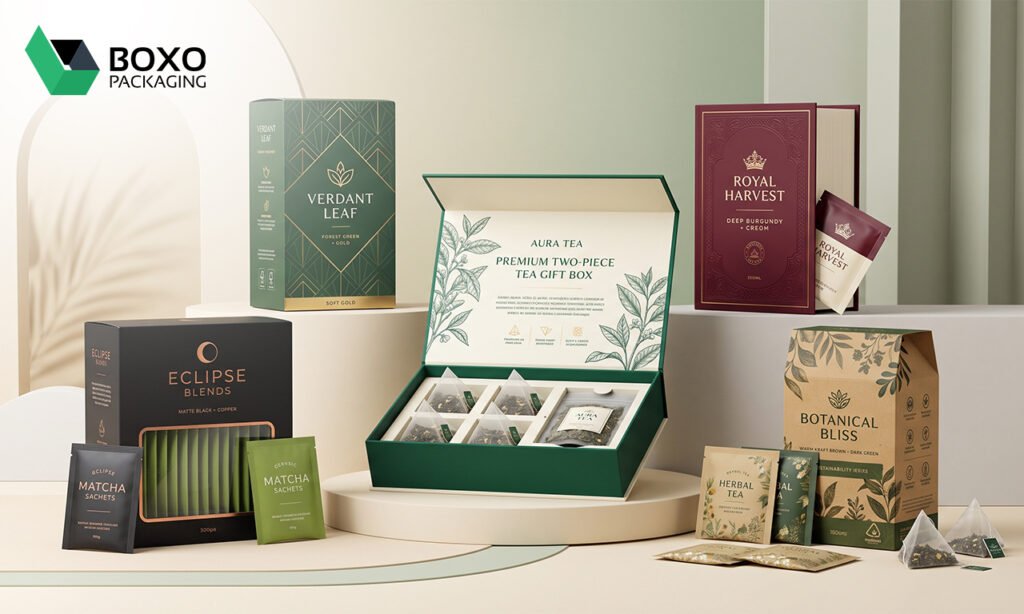
A tea carton gives sachets, loose-leaf pouches, or a small tasting set a defined place for storage and product information. Custom Tea Boxes can be designed around the number of servings, the shape of inner packs, and the need to protect aroma from surrounding odors or moisture. The carton is usually an outer pack, so the tea’s direct barrier needs should be considered separately.
Build the interior around the tea format
Individually wrapped tea bags may fit in a simple carton, while a sampler with several flavors benefits from compartments or dividers. Loose-leaf tea is often held in a sealed pouch or tin inside the outer box. Measure each inner unit and allow space for easy packing without crushing sachets. A box that is too large can let the contents shift; one that is too tight can damage wrappers.
Materials and barrier needs
Paperboard offers a printable surface and can ship flat before assembly, but it does not automatically provide an aroma or moisture barrier. Use an appropriate sealed inner pouch, tin, or wrap when the tea requires it. Kraft board can suit a natural brand style, while coated white board supports detailed flavor illustrations and small text. Confirm that any inner material is suitable for food contact.
Make flavor differences easy to identify
A collection may include black, green, herbal, decaffeinated, and seasonal blends. Distinct names, readable flavor notes, and a consistent placement for preparation guidance make the assortment easier to use. Color can support identification, but text should carry the essential distinction. Include required ingredient, allergen, net quantity, or origin details according to the product and market.
Structural and print choices
The box should be easy to stock and practical for customers to open. Consider these options:
- Internal dividers to separate flavors within a multi-blend sampler.
- A tuck-end carton for standard tea sachets or a compact retail unit.
- A sleeve over an inner tin when the tin provides the main protective barrier.
- A gift-style carton with an insert for a premium tasting assortment.
Gift sets and subscription packs
Tea assortments are often sold as seasonal gifts, corporate thank-you packs, or subscription selections. For a gift set, arrange the flavors so the contents look intentional when the lid opens. For recurring shipments, check the box dimensions against the mailer and the number of units packed. Decorative tissue can add presentation value, but should not obstruct labels or compromise the closure.
Test the pack with the actual contents
A sample should be packed with the final sachets, pouch, or tin. Check the fit, opening, label visibility, and whether the contents stay in order after ordinary handling. If the tea is sensitive to humidity or odor, assess the full packaging system rather than expecting the paperboard outer carton to provide the barrier.
What are Custom Carbonless Forms designed to do?
Carbonless forms create duplicate or multi-part copies when pressure from writing or printing transfers an image through specially coated sheets. Custom Carbonless Forms are used for invoices, purchase orders, delivery tickets, service reports, work orders, and other records where different people need a copy of the same transaction.
Choose the right number of parts
A two-part set may provide a customer copy and an office copy, while three or more parts can route information to several departments. Each additional sheet affects writing pressure, legibility, and handling. Decide who needs each copy before setting the form structure. The copy sequence should be obvious through paper color, printed labels, or both.
Design fields around the real workflow
Forms are most useful when they follow the order in which staff collect information. A service ticket might include customer details, job description, parts used, approval, and completion date. Leave enough writing space for realistic entries, and avoid tiny boxes that invite cramped handwriting. Numbered fields, checkboxes, and clear section labels can reduce ambiguity without making the page crowded.
Paper sequence and binding options
Carbonless sets may be glued into pads, supplied as loose sets, or assembled with perforations for tear-off copies. Numbering can support record control, while a wraparound writing shield can prevent pressure from marking the set underneath. Discuss the printer, handwriting or impact-printing method, sheet sequence, and intended use when specifying the stock.
Details to confirm before printing
A proof should be reviewed as a working document, not just a visual design. Confirm the following:
- Correct copy count and sheet order, including which department receives each color.
- Enough space for the longest likely names, notes, quantities, and signatures.
- Perforation, padding, numbering, and binding positions that suit daily use.
- Legible terms and conditions, contact details, and any required record fields.
Keep copies readable in practice
Test the form with the pen or printer method staff actually use. Very light pressure, unsuitable writing tools, or a poor sheet sequence can make later copies difficult to read. If the form will be handled outdoors or in a workshop, consider whether the paper weight and pad construction can withstand frequent use. Sensitive information should be limited to what the workflow needs and handled according to the organization’s privacy practices.
Standardize without losing flexibility
A consistent form layout helps staff find fields quickly across locations or teams. At the same time, leave room for job-specific notes when the work varies. Before reordering, check whether field names, addresses, tax details, or approval steps have changed. A controlled master file can prevent old versions from circulating after a process update. Boxo Packaging can coordinate print specifications against approved artwork.

