
Custom Banners That Turn Ordinary Spaces Into Powerful Brand Statements
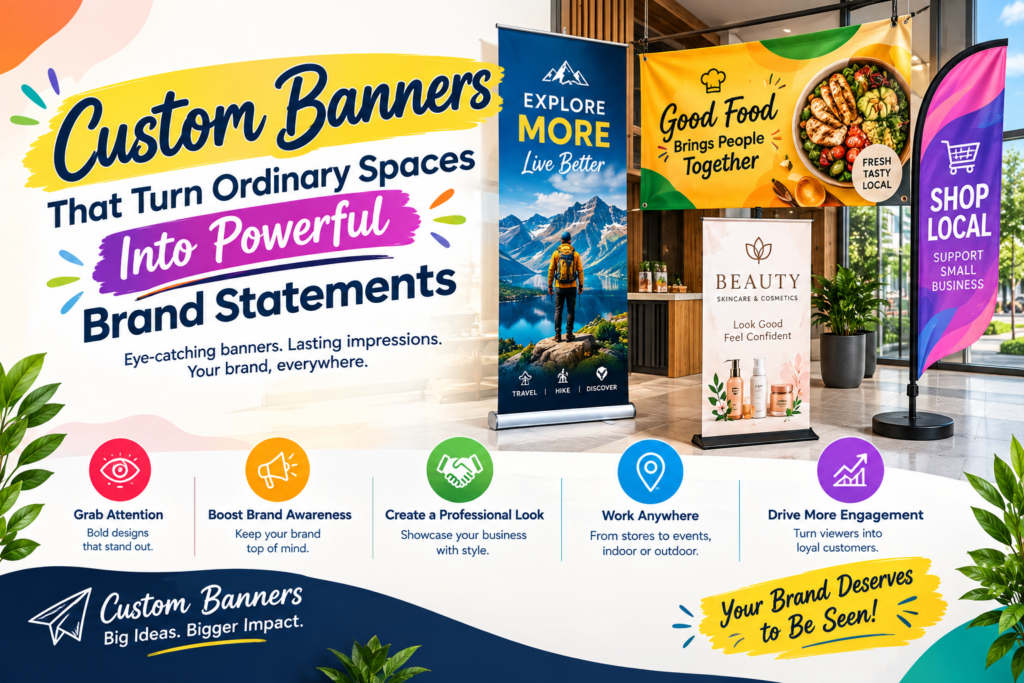
A blank wall, an empty storefront, or an open event area can easily fade into the background. A well-designed banner can change that in seconds. Custom banners give businesses, organizations, event planners, and individuals a simple way to put their message in front of people without making the space feel complicated or overcrowded.
Unlike generic printed signs, custom banners are created around a specific purpose. The wording, colors, graphics, dimensions, and overall appearance can all be adjusted to match the message you want people to notice. That flexibility makes them useful for everything from business promotions and grand openings to celebrations, exhibitions, and community events.
Why a Personalized Banner Feels More Noticeable
People naturally scan their surroundings rather than carefully reading everything they see. A banner has to communicate quickly. When its design reflects a particular brand, event, or message, it has a better chance of catching attention.
A personalized banner can bring together your logo, preferred colors, a short message, and relevant imagery in one visual space. Instead of looking like something selected from a standard collection, it feels connected to the occasion.
That distinction can matter when several businesses or organizations are competing for attention in the same environment.
Designing Around the Message, Not Just the Space
One common mistake is choosing the banner size first and thinking about the message afterward. A better approach is to start with the purpose.
Ask yourself what someone should understand after looking at the banner for only a few seconds.
If the goal is to announce a sale, the offer should be immediately visible. If the banner is promoting an event, the event name and essential details should have enough visual weight. For a brand-focused display, the identity of the business may deserve greater emphasis.
Once the central message is clear, the design can be built around it.
Color Can Shape the First Impression
Color is more than decoration. It can influence how a banner feels before someone reads a single word.
Strong contrasts can make important information easier to spot from a distance. Brand colors can help maintain visual consistency across different marketing materials. Softer combinations may work better for elegant events, while brighter palettes can create a more energetic appearance.
The key is balance. Using every available color can make a banner difficult to understand. A focused palette usually creates a cleaner visual experience.
Typography Should Work From a Distance
A beautiful typeface is not automatically a practical typeface for a banner.
Large-format graphics are often viewed from different distances and angles, so the text needs to remain clear. Decorative fonts may work for a small supporting element, but the main message generally benefits from simple, strong lettering.
Spacing matters as well. When words are packed too closely together, the entire design can feel rushed. Giving the text room to breathe can make the message easier to absorb.
Choosing Images That Support the Story
Images can give a banner personality, but they should have a reason for being there.
A restaurant promoting a new menu might use an appetizing food image. A school event could include an appropriate illustration or photograph. A business exhibition might focus more heavily on its products or services.
The image should strengthen the message rather than compete with it. If a photograph is so busy that the headline disappears into the background, the design loses some of its practical value.
Where Custom Banners Can Make a Difference
The flexibility of custom banners makes them suitable for many environments.
Storefront Promotions
A banner outside a shop can introduce a new service, highlight a special offer, or announce an important change. Because it can be designed specifically for the business, the display can remain consistent with the store’s existing visual identity.
Trade Shows and Exhibitions
At an exhibition, businesses often have limited space to communicate who they are. A carefully planned banner can establish a recognizable backdrop while helping visitors understand what the company offers.
Community and School Events
Fundraisers, school programs, sports activities, and local gatherings often need clear visual communication. Custom banners can identify the event, recognize supporters, or guide attendees toward important areas.
Celebrations and Personal Occasions
Banners are not limited to commercial use. Birthdays, anniversaries, graduations, reunions, and other celebrations can all benefit from a design created specifically for the occasion.
Size Should Follow the Viewing Distance
There is no universal banner size that works for every situation.
A small indoor display may need a completely different format from a banner placed outside a building. The expected viewing distance, available wall or fence space, amount of text, and surrounding environment all influence the appropriate dimensions.
Before ordering, consider where the banner will actually be installed. A design that looks impressive on a computer screen may become difficult to read if people are expected to view it from far away.
Material and Finishing Details Matter Too
The visual design is only one part of a successful banner. The physical environment should also influence the material and finishing choices.
An indoor banner may not require the same characteristics as one intended for repeated outdoor use. Wind, sunlight, moisture, installation methods, and storage can all affect how the finished product performs.
Finishing options such as reinforced edges, eyelets, or other mounting solutions can also make installation easier. Thinking about these details before production can prevent practical problems later.
A Good Banner Does Not Need Too Much Information
One of the easiest ways to weaken a banner is to put everything on it.
A banner is not a full brochure. If people need to stop and read a long paragraph before understanding the purpose, the design is probably carrying too much information.
Try reducing the message to its essentials. A strong headline, a supporting detail, a recognizable brand element, and a clear next step may be enough.
The less visual clutter there is, the easier it becomes for the important information to stand out.
Customization Gives Small Brands More Creative Freedom
A custom design can be particularly useful for businesses that want their physical marketing to feel consistent with their online presence.
A company can carry its colors, logo style, imagery, and tone from its website and social platforms into its physical signage. This creates a more connected brand experience rather than making every marketing channel look unrelated.
Even a simple banner can contribute to that consistency when its design choices are intentional.
Think About Reuse Before Finalizing the Design
Some banners are created for one specific date, while others may be used repeatedly.
If you expect to reuse a banner, avoid details that will become outdated quickly. A general promotional message, evergreen brand statement, or adaptable design may have more long-term value than a design tied to one short-term campaign.
For one-time events, however, specific details can make the banner feel more personal and memorable.
Turning a Blank Surface Into a Clear Message
The real value of custom banners is not simply that they are large printed graphics. Their strength comes from the ability to combine a specific message with a specific visual identity and a specific setting.
When the wording is concise, the design is easy to read, the colors feel intentional, and the physical format suits its environment, a banner can become more than background decoration. It can help people understand where they are, what is happening, and which brand or organization is behind it.
Whether you are preparing for a business promotion, public event, exhibition, celebration, or everyday storefront display, starting with the purpose of the banner makes the design process much easier. The strongest result is usually not the one with the most elements—it is the one that communicates the right idea clearly and confidently.
Final Thoughts
Custom banners provide a flexible way to turn an ordinary display area into a clear and purposeful visual message. Their value comes from more than size or color. A successful banner brings together the right message, design, materials, and placement to communicate with its intended audience.
The best approach is to begin with the purpose rather than the decoration. Decide what people need to notice, keep the wording focused, choose visuals that support the message, and make sure the finished design suits its surroundings.
Whether it is being used for a business promotion, trade show, community gathering, school function, or personal celebration, a thoughtfully created banner can give the space a stronger identity and make the message easier to remember.
When every design choice has a reason, a banner stops being just printed material and becomes a meaningful part of the experience.
