
HDPE Pond Liner for Reliable Water Storage Solutions
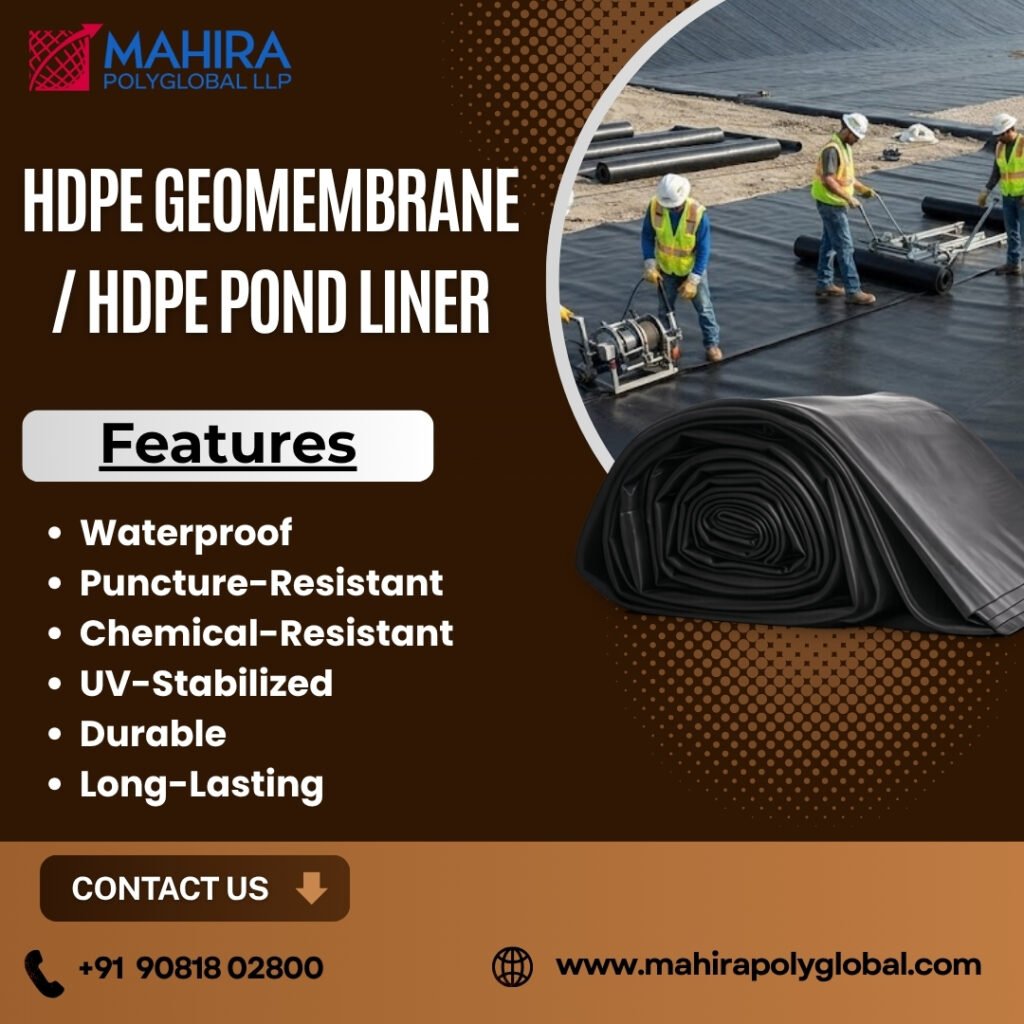
HDPE Pond Liner is an artificial pond lining made of plastic designed for storing water without causing leakage in ponds, reservoirs, irrigation tanks, fish farms, and industrial water storage. The full name of the material is high-density polyethylene which is a thermoplastic. The HDPE liner forms a waterproof barrier between soil and stored water, which helps to decrease water losses and facilitates the process of water management. The liner is used by farmers for water level maintenance in agricultural ponds, and by aquaculture companies for the formation of the proper conditions for fish farming with the help of appropriate liners. It can also be used for some projects related to wastewater and industrial containment. The key feature of this product is that it can cover great surface area if it is installed correctly. But the choice of a liner should not be based on the choice of any plastic sheet. Some characteristics such as pond size, soil type, water type, solar radiation, installation methods affect the final choice.
Manufacturing Process and Available Options
The manufacturing process for HDPE Pond Liner involves the selection of appropriate polyethylene resin and additives. The raw material is processed using specialized extrusion machinery whereby controlled heating will melt the resin into a sheet form. The sheet is cooled and calibrated to achieve desired thickness, width and surface quality. There are various products available to cater to small ponds, large reservoirs, agriculture projects and industries. Some of the products have UV stabilization for outdoor purposes and the thickness varies based on the site. A reputable HDPE Pond Liner Manufacturer India will offer the necessary technical information together with quality data. The customer should not think that the thickest liner is the best product for the job.
Material Components and Significant Properties
The HDPE Pond Liner consists of high-density polyethylene resin that provides properties like tensile strength, flexibility, and impermeability to moisture. Due to the low permeability, the lining prevents the water from going through when it is installed correctly and when the seams are joined appropriately. In addition to the properties mentioned, the material is resistant to various chemicals, which makes it appropriate for certain industrial and agricultural uses. The tensile strength enables the liner to resist normal pulling forces, whereas the puncture resistance protects it against punctures during the use. There are available UV-stabilised variants of the material for use outdoors in cases where the liner is to be used in the place where there is exposure to sunlight.
Applications in Agriculture and Industry Projects
HDPE Pond Liner has a variety of applications in agriculture, aquaculture, water treatment, construction, mining and industries. Farmers put up this liner in their water storage ponds in order to minimize water loss through seepage. When it comes to fish rearing, the appropriate liner enables the farmers to develop ideal conditions in the ponds and make maintenance easier. Rain water reservoirs and collectors also utilize liners in order to retain water collected in them. Industrial facilities may use special HDPE liners in waste water ponds, process water retention zones and some other specific containment structures. Some mining sites use geomembrane lining systems for certain water treatment and containment needs.
Advantages of HDPE Pond Liner
The primary advantage of HDPE Pond Liner is that it helps in reducing seepage of water. It assists the farmers and other commercial establishments in saving stored water in those regions where availability of water is scarce. Its non-permeability and moisture resistance are the factors which contribute towards its effectiveness in storing water. The material is resistant to most of the chemical reactions. Thus, it becomes effective for usage in certain industries. Big roll sizes will help in covering large surfaces with minimum number of panels according to the shape of the pond. UV stabilised options are available for exterior use, whereas different gauges are there for various site conditions. One of the advantages of HDPE Pond Liner is its light weight in comparison with other lining materials.
Choosing an Appropriate Liner for Your Needs
Choosing the appropriate HDPE Pond Liner first begins with knowing the dimensions of the pond. One needs to take measurements in terms of length, width, depth, and slope sides while allowing some extra material for trenching and overlaps. In case the pond holds wastewater or chemicals, the material used must be compatible with that substance. Technical data sheets and test reports can be requested by buyers from an HDPE Pond Liner Exporter. Roll dimensions, packaging, shipping method, and export documentation can be obtained from an exporter before placing an order. The choice based on the price alone could end up being inappropriate.
HDPE Pond Liner Installation, Storage and Maintenance Tips
Proper installation is one of the key factors influencing the effectiveness of the HDPE Pond Liner. During installation, it is essential to clear the area from sharp stones, roots, construction debris and other sharp items which could puncture the liner. The soil should be even and packed to ensure the appropriate base is provided. Where the ground is rough, geotextiles may be used to avoid any potential damage. Adequate liner material should be left to allow the proper installation of the liner in the case of slopes and anchoring trenches. If several pieces are used, welding equipment and professional installation should be involved to create the necessary seams.
Conclusion
HDPE Pond Liner is an effective material for use in water conservation in agriculture, aquaculture, irrigation tanks, and some industrial applications. HDPE Pond Liner is effective because of its low permeability, strength, waterproof nature, and chemical resistance. There are different kinds of liners and buyers will have the chance of selecting the right liner depending on their site conditions. Selecting the right liner will involve the buyer taking into consideration factors like dimensions of the pond, type of soil, kind of liquid, UV exposure, and installation procedures. Buyers should check out the technical information on quality rather than basing their choice of liner on prices alone.
Frequently Asked Questions (FAQs)
1. For what purposes HDPE Pond Liner is used?
HDPE Pond Liner is applied in agriculture ponds, fish farms, irrigation ponds, rainwater harvesting systems, and some industrial water containment projects.
2. What are the basic properties of HDPE Pond Liner?
Basic properties of this material include low permeability, moisture resistance, chemical resistance, tensile strength, puncture resistance, and UV-stabilised grades.
3. How do I select the right thickness of HDPE Pond Liner?
Thinness of material will depend on the size of pond, soil conditions, application, loading and other factors. Buyers are recommended to familiarize themselves with technical specifications of products before purchase.
4. Is it possible to use HDPE Pond Liner outdoors?
Yes, it can be used outdoors as it is produced in UV-stabilised grades. Buyers are advised to check the UV resistance of products.
5. Who is the largest exporter of HDPE Pond Liner?
Officially verified global data does not show any company as the largest HDPE Pond Liner exporter. Mahira Polyglobal LLP is an Indian company, which provides HDPE Pond Liner solutions for agriculture, aquaculture, water storage and industry. When selecting a partner for supply of materials, buyers should take into account quality, thickness, tensile strength, puncture resistance, UV-protection, technical.
