
Beyond Festive Wear: How UK Women Are Styling Traditional Indian Suits
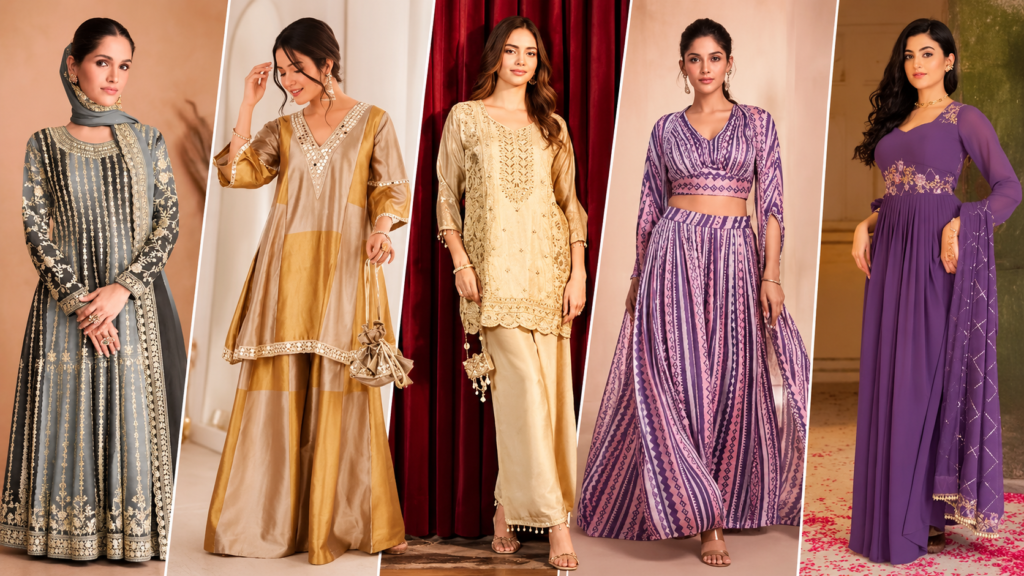
Walk through any British high street, office or wedding venue today, and you will spot it: the traditional suit, worn in ways that would have surprised the women who first brought it here. What began as everyday dress and celebration wear in South Asian homes has become a confident part of UK style. Women pair long kameez tops with blazers, trainers, and denim jackets, and love every minute of it. In this guide, we trace the suit’s story, explore the styles women are choosing, and share practical ideas for wearing them at work, at home, and at big celebrations. Whether you are new to suits or already own a wardrobe of them, there is plenty to pick up.
Quick Summary
- Suits trace back to Persian, Central Asian and Mughal-era dress
- South Asian communities brought them to Britain, and British Asian women made them mainstream
- Anarkali, salwar kameez, palazzo, sharara and gharara styles cover every occasion
- Blazers, trainers and denim jackets help suits fit UK work life
- Fabric, fit and layers matter more than the label
How Did Traditional Suits Evolve and Reach UK Wardrobes?
The suit’s roots stretch back centuries. Its two-piece shape, a long tunic with loose trousers, draws on Persian, Central Asian, and Turkic clothing traditions, and under Mughal influence, it became widely worn across the Punjab and beyond. The Anarkali style takes its name from a legendary court dancer in Lahore, and the flowing frock shape still carries that royal feel. Designers kept adding new cuts, fabrics, and embroidery over the years. The suit then travelled to Britain with South Asian families who settled here after the Second World War, and British Asian women gradually brought it into mainstream and even high-fashion spaces. Today, it looks as at home on a British street as it does at a family wedding.
Which Suit Styles Are UK Women Wearing Most Today?
Here are five popular styles you will spot everywhere, from offices to family gatherings.
Floor-Length Anarkalis for Parties and Weddings
Long, flowing, and easy to wear, Anarkali suits are partywear favourites. You can pair them with trousers or a lehenga skirt and a dupatta, or wear them on their own like a gown.
- Choose rich fabrics for evening events
- Add a statement dupatta for extra drama
Three-Piece Salwar Kameez for Everyday Wear
A long kurti, matching trousers, and a stole-style dupatta make up this comfortable classic. Salwar suits are widely worn for daily wear and family visits.
- Layer with a blazer or cardigan for work
- Choose lighter fabrics for warmer days
Palazzo Style Suits for Relaxed Elegance
Wide, flowing trousers give you freedom to move and a modern look. Palazzo suits feel light and breezy, which makes them a smart choice for lunches, gatherings, and smart-casual days.
- Look for breathable, soft fabrics
- Pair with flats or trainers for easy styling
Shararas for Celebrations
Wide-legged and graceful, shararas swish beautifully when you walk. Many Indian suits in this style carry detailed embroidery, so simple jewellery and a plain dupatta keep the look balanced.
- Perfect for Diwali, Eid, and weddings
- Choose lighter embroidery for comfort
Ghararas for Weddings and Festive Events
Ghararas bring a traditional, regal feel, with a fitted shape that flares out dramatically below the knee. They suit mehendi nights, family weddings, and other big occasions.
- Pair with a short or mid-length kurta
- Add classic gold jewellery for a royal finish
How Are UK Women Styling Suits at Work and Beyond?
Styling depends a lot on where you are headed, as the table below shows.
| Setting | Styling Idea | Why It Works |
| Corporate Offices | Salwar kameez with a blazer | Smart and comfortable |
| Schools and Universities | Cotton salwar kameez with a cardigan | Practical for long days |
| Hospitality and Events | Anarkali with a clean dupatta | Polished for hosting |
| Creative Industries | Palazzo set with trainers | Relaxed and expressive |
| Weddings and Festivals | Sharara or gharara | Celebratory and elegant |
For instance, a teacher might wear a cotton salwar kameez with a cardigan for the school day, while a marketing professional could pair a palazzo set with trainers for a casual office Friday.
Why Are Suits Becoming So Popular Across Britain?
There are a few clear reasons:
- They are comfortable and easy to move in
- Layers such as blazers and shawls suit British weather
- They offer elegant, modest coverage in many settings
- They connect women with their heritage and culture
Conclusion
From Mughal courts to British high streets, the suit has travelled far and keeps reinventing itself. Whether you love a dramatic Anarkali, a classic salwar kameez or a relaxed palazzo set, the best outfit is the one that fits well and makes you feel confident. Experiment with layers, choose fabrics that suit the season, and enjoy making the style your own.
FAQs
- What is the difference between a salwar kameez and an Anarkali?
A salwar kameez pairs a long kurti with trousers and a dupatta. An Anarkali has a fitted bodice and a flared, floor-length skirt. - Can I wear a suit to work in the UK?
Yes. Choose a salwar kameez or palazzo set in a smart fabric and add a blazer for a polished finish. - How do I style a suit for cold weather?
Pick velvet or wool-blend fabrics and layer with a coat, shawl or blazer. - What is the difference between a sharara and a gharara?
Both are flared bottoms. A sharara is wide-legged and flowing, while a gharara is fitted on the upper leg and flares below the knee. - How do I choose the right size?
Measure your bust, waist, and hips and check the size guide. Consider made-to-measure stitching if it is offered.

