
U.S. Plastic Surgeon SEO: Fix Local Gaps Before Content
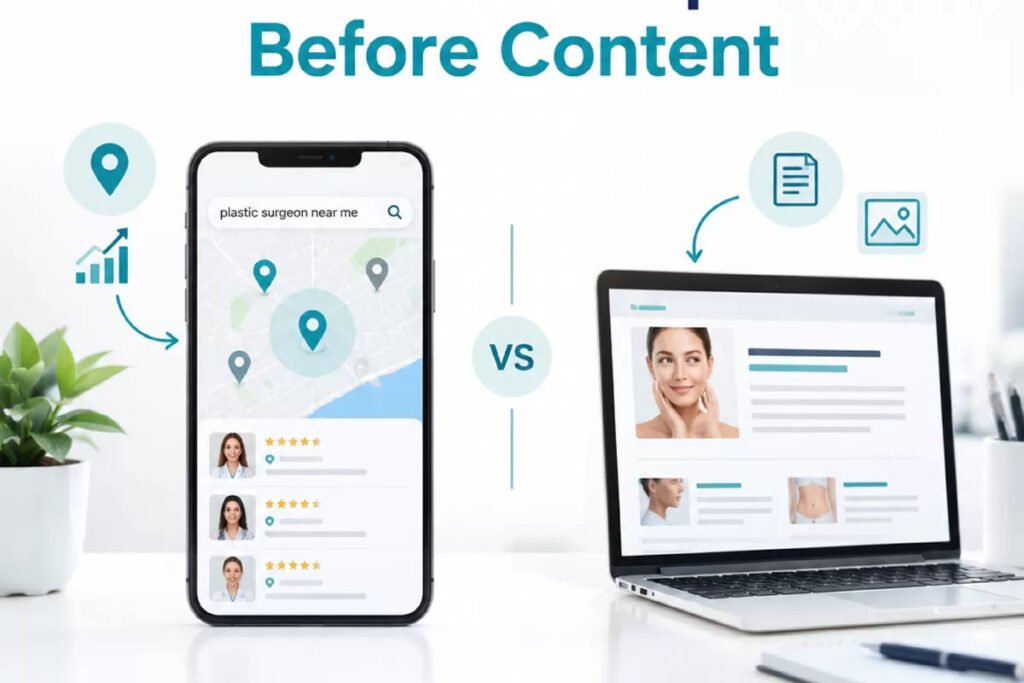
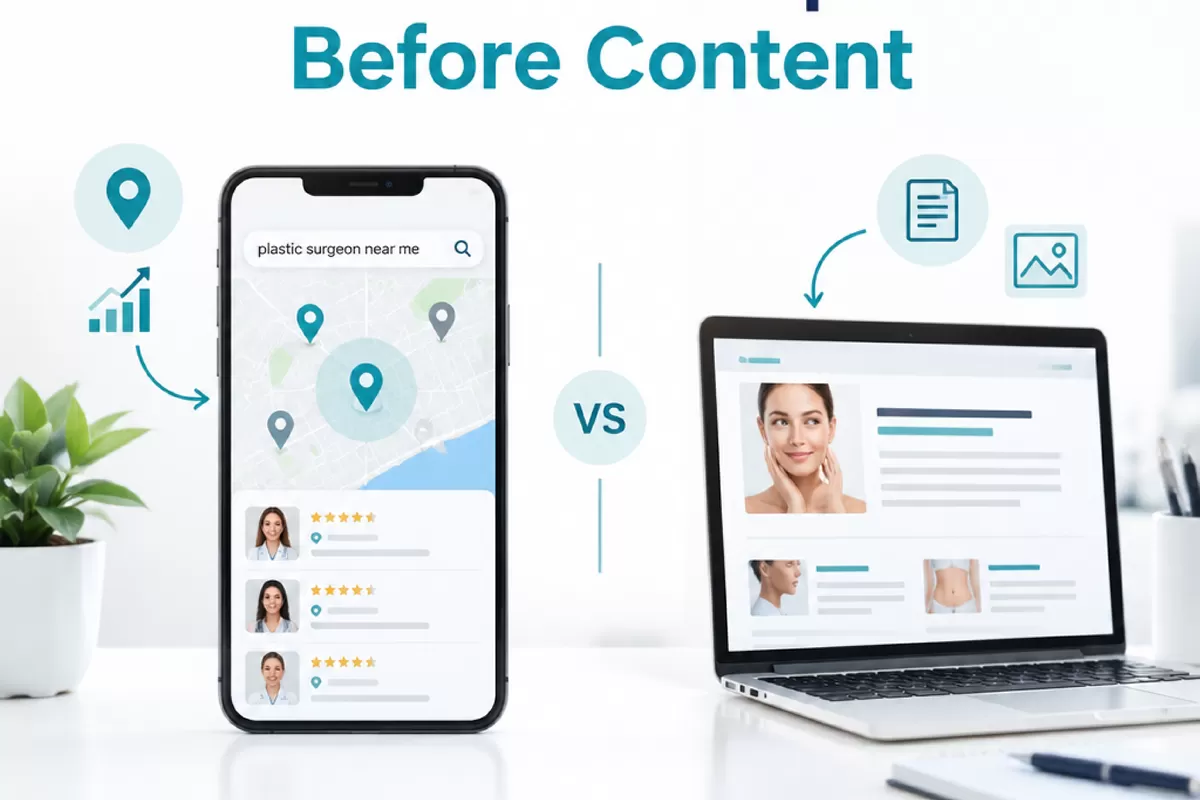
For a plastic surgery practice in the United States, weak local visibility can mean prospective patients find another office first, even when your team offers the procedure they are researching. The answer is not always to publish more articles. Start by checking whether local business details are accurate, the review process is sound, and procedure pages answer the questions a prospective patient is likely to have.
This gives practice managers a practical way to prioritize plastic surgeon SEO: fix the information and page gaps that could confuse people, then decide whether new content is warranted. These steps can improve the usefulness of your online presence, but they do not guarantee rankings, inquiries, or patient outcomes.
Begin plastic surgeon SEO with a United States local audit
Before changing page titles or commissioning new copy, review how the practice appears in local search and map results. Open your Google Business Profile and confirm that the practice name, address, phone number, hours, website, and appointment details match what patients see on the site. Check that the selected categories and services accurately describe the practice. Follow Google’s current eligibility and representation rules, especially if the practice has multiple offices or shares an address.
Compare those details against the practice website and major business directories. Consistent name, address, and phone information, often shortened to NAP, helps avoid conflicting signals and prevents practical problems such as a patient calling an old number. For multiple locations, give each eligible office its own accurate details and a useful location page. Do not create thin pages that merely swap one city name for another.
Review the way the practice requests and responds to patient reviews. A clear, consistent process can help patients share honest feedback, while staff should avoid incentives or pressure to leave a positive review. Replies should be professional and protect patient privacy. Do not confirm that a reviewer is a patient or discuss treatment details in a public response. Reviews are one part of a broader local presence, not a substitute for accurate business information or useful pages.
If your team needs outside help to organize the review, SEO Deep Insights describes SEO, answer-engine, and generative-engine work for businesses in different industries and countries. Its information outlines an audit-first approach and a free proposal with a practical next step within 24 hours. You can learn more about that process before deciding whether support fits your practice.
Make procedure pages clear before expanding the content calendar
A procedure page should help a reader understand what the practice offers and what to do next. Check whether each priority page names the procedure plainly, explains it in language a general reader can follow, and identifies the surgeon or practice responsible for providing care. Include verified details about the surgeon’s qualifications and the practice’s process. Avoid unsupported claims, guaranteed results, or language that suggests one procedure is right for every person.
Useful details vary by procedure, but a page may need to explain who may ask about it, what a consultation involves, what questions to raise with the surgeon, and how to contact the practice. Medical content should be reviewed by an appropriately qualified clinician before publication. Search copy is not a replacement for an examination or individualized medical advice, and a page should make that distinction clear.
Check whether the page has relevant imagery and whether those images are handled responsibly. Use images the practice has permission to publish, follow consent and privacy requirements, and add concise alternative text that describes the image for people using assistive technology. Avoid keyword-heavy alt text or images that imply a typical result when they do not represent one. If a page includes before-and-after images, provide context and have the practice review how they are presented.
Then test the inquiry path on a phone, since many local searches happen on mobile devices. Is the phone number easy to tap? Does the appointment form ask only for information the practice needs at that stage? Does the confirmation message explain what happens next? A broken form, vague call to action, or unclear office location can undermine an otherwise informative page. These checks assess usability; they are not promises of better rankings or more consultations.
Prioritize fixes, then measure what changes
Put the audit findings in a short list and sort them by patient impact, accuracy, and effort. Correct an outdated phone number before planning a new educational article. Clarify a procedure page that does not identify the service or offer a working contact route before expanding into related topics. If a location page is missing, first confirm that the practice has a genuine office and enough distinct information to make that page useful.
- Fix first: incorrect office details, broken links or forms, and conflicting location information.
- Improve next: priority procedure pages with unclear explanations, missing practice details, or poor mobile inquiry paths.
- Expand later: new supporting articles based on real questions the practice can answer accurately.
For local visibility, review map and local search presence over time rather than relying on a single search from one device or ZIP code. Search results can vary by location and context. In Google Business Profile, monitor the available performance information, such as calls or website interactions, and compare it with the practice’s own inquiry records. In analytics, use consistent tracking for calls and forms where possible. Treat these measures as clues, not proof that a particular SEO edit caused a patient inquiry.
For procedure pages, check whether people can reach them from relevant parts of the site, whether the content stays accurate, and whether the page receives qualified visits and completed inquiries. A rise in traffic alone may not mean the page is serving prospective patients well. Review search terms and inquiry quality with the practice team, while keeping patient information private and following applicable privacy requirements.
Plastic surgeon SEO works best as a sequence of careful decisions, not a race to publish. Verify the local foundation, make important procedure pages genuinely useful, and remove friction from the inquiry path. Once those basics are in order, use observed patient questions and performance data to choose what deserves attention next.

