
Saudi Arabian Men Clothing: What Do Men Wear in Riyadh?
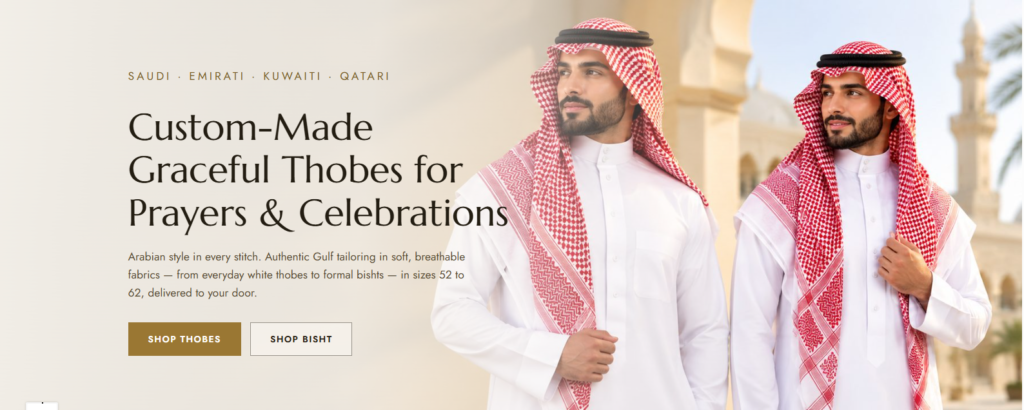
If you have ever watched a video from a Saudi city or a desert festival, you may have noticed that most men wear a long, clean, white robe. That look is a big part of saudi arabian men clothing, and it is much deeper than it seems. Each piece has a job to do. Each piece also tells a small story about weather, family, and pride. In this guide, we will walk through every piece in plain words, so you can understand what men wear, why they wear it, and how to wear it well.
The style has stayed close to the same for hundreds of years. Men in the Arabian Peninsula needed clothes that kept the sun off, let the air move, and still looked neat at a family meal. The answer was a loose robe, a light head cloth, and simple shoes. Today, that same plan still works in the office, at the mosque, and at a wedding. Let us start with why the clothes look the way they do.

Why the Clothes Fit the Land So Well
Saudi Arabia has long summers, bright sun, and dry air. In some places the heat climbs very high by noon. At night, the desert can feel cold. Clothes in this land must handle both.
A loose robe lets air flow around the body. Light cotton keeps the skin cool and takes sweat away. A head cloth blocks the sun and keeps sand out of the face when the wind picks up. These are not fashion tricks. They are smart answers to real weather.
There is also a social side. Neat, long clothing shows respect. Men dress with care when they meet elders, visit a home, or sit with guests. A clean outfit says, “I value this moment.”
The Main Pieces Men Wear Every Day
Most outfits are made from a small set of items. Once you know them, you can read almost any look at a glance.
The Thobe: The Heart of the Outfit
The thobe is a long, straight robe that reaches the ankles. It has long sleeves and a simple collar. In Saudi Arabia, many people also call it a thawb. Most men own several, and they wear one almost every day.
Common Collar and Cuff Styles
The Saudi collar is often a small, round band that sits close to the neck. Some thobes close with buttons, and others use a soft tie. Cuffs can be plain or have a double fold with cufflinks. Little details like these help a man match his thobe to the day, whether it is a normal workday or a big family gathering.
Fit Matters
A good thobe should be loose, but not floppy. The hem should sit near the top of the shoe. If it drags on the ground, it gets dirty fast. If it is too short, it looks odd. Many men get a quick tailor fix to make the length just right.
The Ghutra and Shemagh: The Head Cloth
The ghutra is a large square of cloth worn on the head. A plain white one is common in Saudi Arabia, and it is often worn in warmer months. The shemagh is similar, but it usually has a red and white or black and white check pattern. It is popular in colder months and with men who spend time outdoors.
Ways to Fold It
There is no single rule for folding. Some men fold the cloth into a triangle and let the sides fall down. Others pull the ends back over the shoulders. A few like a sharp, flat fold that stays still all day. Most men learn a style from a father or an older cousin, and then make it their own.
The Agal: The Black Cord
The agal is a thick black cord worn in a ring on top of the head cloth. Its job is to hold the cloth in place. In the past, it also had a practical use in the desert, since a cord could be used to tie up a camel’s front legs. Today it is a sign of tradition. Some men skip it at home and wear it when they go out or dress up.
The Bisht: The Cloak for Big Days
The bisht is a light cloak worn over the thobe. It is usually black, brown, beige, or cream, and it often has gold trim along the edges. You will see it at weddings, Eid prayers, graduations, and official events. A bisht makes an outfit feel important. For that reason, it is not worn on a normal day.
Shoes and Sandals
Simple leather sandals are common, and so are plain closed shoes in black, brown, or tan. Loafers are a popular pick with a thobe because they are easy to slip on and off. Since many people remove their shoes at the door of a home or mosque, easy footwear makes daily life smoother.
Colors and Fabrics Men Choose
White is the best known color, but it is not the only one. The right color often depends on the season.
Light Shades for Hot Months
White and cream reflect sunlight, so they feel cooler. Lightweight cotton and cotton blends are popular, because they are soft and let the skin breathe. In the hottest weeks, men look for thin, smooth fabric that does not cling.
Darker Tones for Cooler Months
When winter comes, you will see grey, navy, brown, and black thobes. Thicker fabrics such as wool blends keep the body warm. Some men add a coat or a jacket over the thobe on cold desert nights, and that is perfectly normal.
Why Plain Often Wins
Most thobes have no loud patterns. Fine stitching, a clean collar, and a good fit matter more than prints. A plain thobe in a good fabric looks sharp, and it is easy to pair with any head cloth.
What Men Wear at Work, at Home, and at Weddings
The same few pieces can be dressed up or down. Here is how it usually works.
At Work and School
Many offices and government jobs in the country expect a thobe and a head cloth. The thobe is usually white or a soft neutral color. The look is clean and calm, with no extra decoration. Some workplaces, mostly in tech or energy, also allow Western clothes like trousers and shirts, so men may switch between both.
At Home
Indoors, men often drop the head cloth and the agal. They may wear a lighter, simpler thobe or a loose cotton outfit. Comfort comes first when the day is slow.
At Weddings and Eid
Big events call for the best clothes in the closet. A fresh thobe, a pressed ghutra, a shiny agal, and sometimes a bisht complete the look. Many families plan these outfits weeks ahead, and brothers or cousins often dress in the same color so photos look neat.
How Faith Shapes What Men Wear
Faith plays a quiet but strong part in daily dress. In Islam, men are asked to dress with modesty, which means covering the body in a clean and decent way. For men, this usually means covering at least from the navel to the knee, and many choose to wear much more than that out of habit and respect.
If you are exploring muslim dress mens options in general, the thobe is one of the most loved choices around the world. You can see it in the Gulf, in Africa, in South Asia, and in cities across Europe and America. It works for prayer, since the loose cut lets a man bow and sit with ease. You can browse a wider range of styles on ethobe if you want to see how different cuts and colors look side by side.
One more point is worth noting. Clothing for prayer should be clean, so many men keep a fresh thobe ready for Friday. The week’s biggest prayer is a day when people take extra care with how they look and smell. Some also add a little perfume, which is a common and loved habit.

How to Wear a Thobe With Confidence
If you are new to this style, a few small tips will help you feel at ease right away.
Start With the Right Size
Measure from the base of the neck to the ankle for length. Check the shoulders, too. If the seams sit at the edge of your shoulder bone, the fit is likely right. Sleeves should end near the wrist bone.
Keep the Look Simple
Choose a plain thobe, a matching head cloth, and clean shoes. Skip big watches or loud jewelry. A simple wristwatch and a nice pen in the pocket are enough.
Press It Well
Wrinkles stand out on a long, plain robe. A quick press at the collar, cuffs, and front makes the whole outfit look sharp.
Mind the Weather
Wear light fabric in the heat and thicker cloth in the cold. If it is windy, a shemagh does a better job than a loose white ghutra, because it is heavier and stays put.
Easy Care Tips to Make a Thobe Last
Good care keeps a thobe bright for a long time.
- Wash white thobes with other whites so the color stays clean.
- Use cool or warm water, not very hot water, to protect the fabric.
- Treat collar and cuff stains first, since those spots get dirty fastest.
- Hang the thobe to dry in the shade so the sun does not fade it.
- Press it while it is a little damp for smooth results.
- Store it on a wide hanger so the shoulders keep their shape.
Small Mistakes to Skip
A few small slips can spoil a great outfit. Here are the ones people see most.
Wrong length. A hem that drags or sits too high looks off.
Yellow stains. Sweat marks on white fabric can turn yellow over time. Wash soon after wearing.
Mixing too many colors. A dark head cloth with a very light thobe can look messy. Keep the colors close.
Skipping the iron. Even a fine thobe looks tired when it is crumpled.
Tight fit. The whole point of the robe is to feel loose and free. A tight cut loses the charm.
Old Roots and a Modern Look
Even though the basics have not changed much, today’s makers add fresh touches. You can find slim cuts, soft modern fabrics, and quiet details like hidden buttons or neat stitching along the collar. Young men often keep the classic shape and play with tiny details. The result feels both old and new, and that is why the style has stayed so loved.
Travelers also enjoy wearing it. A thobe is comfortable on long flights, relaxed at home, and easy to pack. Many people who first try it for a special day end up wearing it all the time.
Frequently Asked Questions
What do Saudi men wear on their heads?
They usually wear a ghutra or a shemagh. The ghutra is often plain white, and the shemagh often has a red or black check pattern. A black cord called an agal sits on top to hold it in place.
At Ethobe, you can look through thobes that pair well with a classic head cloth, so the whole outfit matches.
What is the white robe that Saudi men wear called?
It is called a thobe, and many people also say thawb. It is a long, loose robe with long sleeves that reaches the ankles. It is made to keep the body cool in hot weather.
Why do Saudi men wear white?
White reflects sunlight, so it feels cooler in the heat. It is also a clean, simple color that many families link with neatness and respect. In winter, men often switch to darker shades like grey or brown.
What is the difference between a ghutra and a shemagh?
The ghutra is usually plain white and lighter. The shemagh has a check pattern, is often a bit thicker, and is a popular pick for cooler days or outdoor work.
What is a bisht, and when is it worn?
A bisht is a light cloak worn over a thobe. Men wear it at weddings, Eid, graduations, and official table outfit when worn with care, and it is common in many Muslim communities.
Final Thoughts
Saudi dress is built on a simple idea: stay cool, stay neat, and show respect. A clean thobe, a light head cloth, and a pair of easy shoes can handle almost any day. From the plain white robe of summer to the rich bisht of a wedding, every piece has a purpose. Once you know what each one does, the whole style makes sense. Start with a good fit, pick a color for the season, and keep everything simple. With these basics, you will carry the look with calm and confidence.
