
Home EMF Survey: What Happens and What You Get
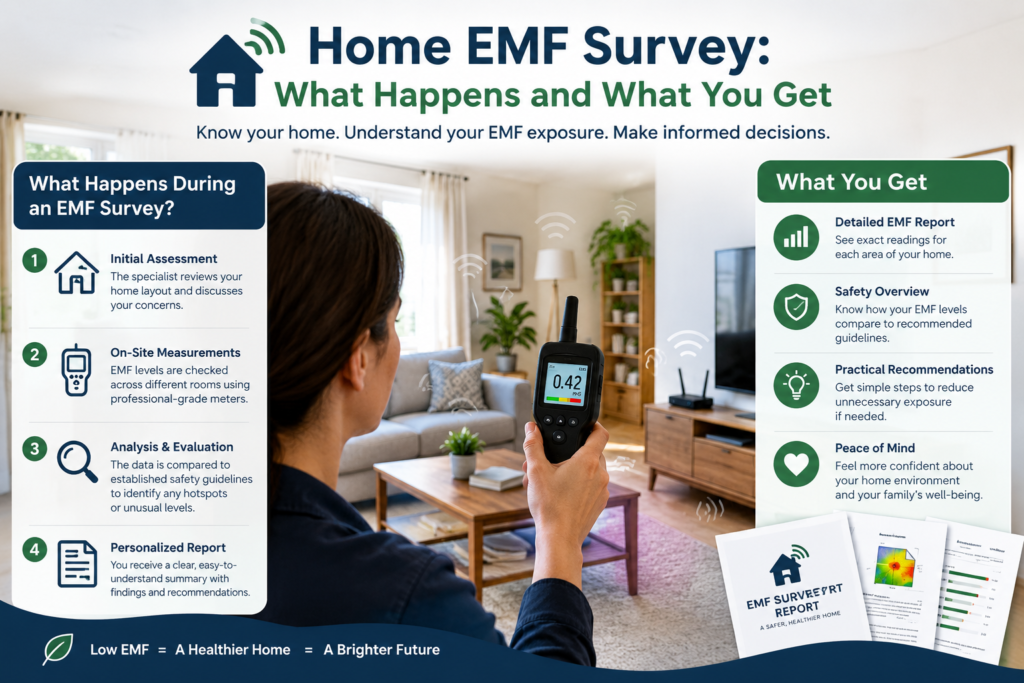
Most of us know our home’s energy rating and heating bill, but very few know what electromagnetic fields (EMF) are around us. A Home EMF Survey changes that by measuring the fields from your wiring, appliances and wireless devices, so you can make decisions based on facts.
What Does a Home EMF Survey Measure?
A specialist uses calibrated equipment to check:
- Electric fields, created by voltage in wiring and cables
- Magnetic fields, created by current in panels, appliances and power lines
- Radiofrequency (RF), from WiFi, smart meters, 5G and mobile masts
- Dirty electricity, the electrical noise caused by electronic devices
How Does the Process Work?
A typical Home EMF Survey starts with a short walkthrough of the basics, so you understand what is being measured. The surveyor then goes room by room, focusing on the places where you spend the most time, such as bedrooms, living areas and your desk. The outside of the property is checked as well, since power lines, substations and masts can all contribute.
What Will the Results Look Like?
Readings only mean something with context, so a good report records where and when each measurement was taken. It should then compare them with a recognised benchmark and explain them in plain English. Expect a list of the main sources, the readings for each room, and practical recommendations.
Common Findings and Simple Fixes
- A bed placed against a wall shared with the electrical panel: move the bed
- A router beside the desk or sofa: move it a few feet away
- Chargers and extension leads near the pillow: relocate them
- Cable clutter under a desk: tidy it and keep it away from your legs
Distance is often the most effective and cheapest change, because levels usually fall quickly as you move away from a source.
Is a Home EMF Survey Right for You?
It can suit homeowners, tenants, buyers, remote workers, and people living near power lines or a mobile mast. Many results are unremarkable, so the main benefit is often clarity and peace of mind.
What It Cannot Do
A Home EMF Survey measures fields. It cannot diagnose medical symptoms or determine their cause. It is also worth knowing that guidelines vary: international limits focus on established short-term effects, while Building Biology guidelines are more cautious for sleeping areas.
Choosing a Surveyor
Ask about calibrated equipment, which standards are used, and what the written report includes. Be wary of dramatic health claims or anyone selling products straight after measuring.
About the author: EMF Inspections Munster provides independent EMF surveys across Ireland.

