
What Is Precision Sheet Metal Fabrication? Process, Machines, Benefits & Applications
Modern industries depend on accurately manufactured metal components for everything from machinery and electrical enclosures to automotive parts and industrial equipment. As product designs become more detailed, manufacturers need reliable processes that can deliver consistent dimensions, clean edges, and controlled surface quality.
This is where precision sheet metal fabrication becomes important. It combines several manufacturing processes to transform flat metal sheets into finished components according to specific design and production requirements.
What Is Precision Sheet Metal Fabrication?
Precision sheet metal fabrication is the controlled manufacturing of metal components from sheet or plate material using processes such as cutting, bending, forming, leveling, deburring, welding, and finishing.
Unlike basic fabrication, precision-focused production places greater emphasis on dimensional accuracy, repeatability, material handling, and quality control. The exact tolerances depend on the component design, material, machine capabilities, and application.
Commonly processed materials include:
- Stainless steel
- Carbon steel
- Aluminum
- Copper
- Galvanized steel
The appropriate material and fabrication process are selected according to the strength, thickness, appearance, and functional requirements of the finished component.
What Is the Precision Sheet Metal Fabrication Process?
Precision fabrication generally involves several stages. The exact workflow varies depending on the component and production requirements.
1. Design and Planning
The process usually begins with a CAD drawing or digital component design. Engineers determine dimensions, material thickness, bends, holes, tolerances, and other specifications.
Production planning also considers material utilization and the sequence of manufacturing operations.
2. Material Selection
The correct sheet material is selected according to the component’s intended use. Thickness, mechanical properties, corrosion resistance, and surface requirements can all influence the choice.
3. Sheet Metal Cutting
Cutting is one of the first major fabrication operations. Depending on the application, manufacturers may use laser cutting, plasma cutting, shearing, punching, or other suitable methods.
A modern sheet metal cutting machine can help manufacturers produce repeatable dimensions and efficiently process production batches.
4. Leveling and Straightening
Cutting and other manufacturing processes can introduce distortion or unevenness into sheet material. Leveling equipment can help correct these variations and prepare the material for subsequent operations.
Properly leveled material is particularly useful when flatness and dimensional consistency are important.
5. Bending and Forming
After cutting and preparation, the sheet may be bent or formed into the required shape. CNC press brakes and other forming equipment can be used to create accurate angles and profiles.
Correct tooling and machine settings are important for achieving repeatable results.
6. Deburring and Edge Finishing
Cutting processes can leave sharp edges or unwanted burrs on the workpiece. These need to be removed before assembly, coating, welding, or further finishing.
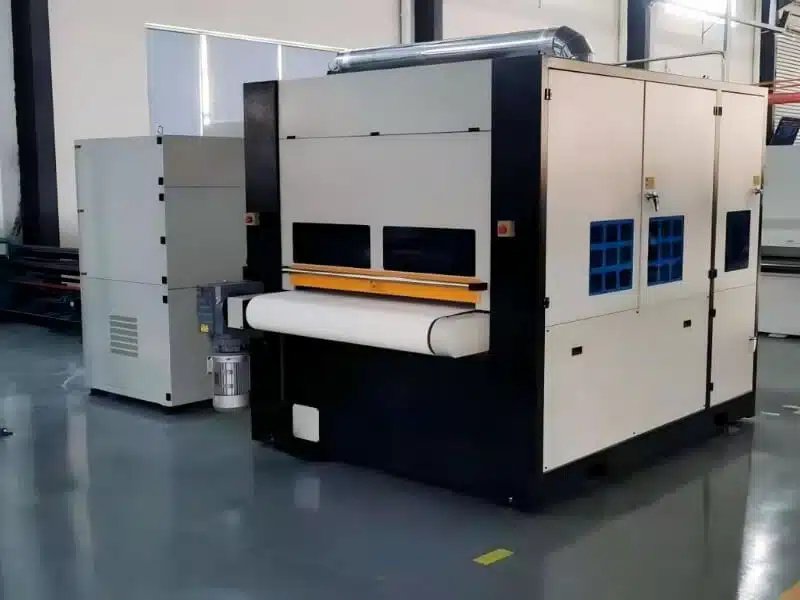
Deburring machines can automate this stage and provide more consistent edge treatment across production batches. Automated deburring can also reduce repetitive manual work and improve operator safety.
7. Welding and Assembly
Some fabricated components consist of multiple pieces that need to be joined. Depending on the material and design, manufacturers may use MIG, TIG, laser, resistance, or other welding techniques.
Welding parameters must be carefully controlled to minimize distortion and maintain dimensional accuracy.
8. Surface Finishing
The final stage may include grinding, polishing, brushing, coating, painting, or other surface treatments.
The finishing method depends on the required appearance, corrosion resistance, functional requirements, and customer specifications.
What Machines Are Used in Precision Sheet Metal Fabrication?
Different machines are used at different stages of the manufacturing process.
Cutting Machines
Laser cutters, plasma cutters, shearing machines, and punching machines are commonly used to produce the required sheet dimensions and profiles.
Leveling Machines
Leveling machines help correct unevenness and improve sheet flatness before further processing.
Press Brakes
Press brakes are used to create bends and formed shapes with controlled angles and dimensions.
Deburring Equipment
Deburring equipment removes burrs and sharp edges created during cutting and machining. Automated systems are useful for manufacturers processing large production volumes.
Grinding and Polishing Equipment
Grinding and polishing machines can improve surface condition and prepare components for their final finish.
The right combination of machines depends on material type, sheet thickness, component geometry, production volume, and required tolerances.
What Are the Benefits of Precision Sheet Metal Fabrication?
Precision fabrication can provide several advantages for industrial manufacturers.
Consistent Component Quality
Controlled processes and repeatable machine settings can help produce components with consistent dimensions from one production batch to another.
Better Material Utilization
Modern cutting technologies can optimize sheet layouts and reduce unnecessary scrap, particularly when producing large quantities of components.
Improved Production Efficiency
Automating repetitive operations can shorten processing time and reduce manual intervention.
Reduced Rework
Accurate cutting, bending, leveling, and finishing can help reduce dimensional errors and the need for repeated processing.
Flexible Production
Precision fabrication can support both smaller production runs and larger-volume manufacturing, depending on the equipment and workflow.
Improved Surface and Edge Quality
Processes such as deburring, grinding, and polishing can produce cleaner edges and more suitable surfaces for assembly, coating, or final use.
Where Is Precision Sheet Metal Fabrication Used?
Precision-fabricated components are used across a wide range of industries.
Automotive
Manufacturers use fabricated sheet metal components for brackets, panels, structural parts, enclosures, and various vehicle components.
Electronics
Electrical cabinets, equipment housings, brackets, chassis, and protective enclosures often require accurately fabricated sheet metal.
Industrial Machinery
Machine frames, covers, guards, brackets, and structural components can be manufactured using precision fabrication processes.
Aerospace
Aerospace manufacturing requires carefully controlled materials and processes for many structural and non-structural components.
HVAC
Ductwork, housings, panels, brackets, and other components can be produced using sheet metal fabrication techniques.
General Engineering
Precision-fabricated parts are also used in machinery, automation equipment, construction products, and various industrial applications.
How Can Manufacturers Improve Fabrication Quality?
Manufacturers can improve the reliability of their fabrication process by focusing on several areas:
- Use suitable materials for each application.
- Maintain cutting and forming equipment regularly.
- Check machine alignment and calibration.
- Establish clear quality-control procedures.
- Monitor material thickness and flatness.
- Inspect finished dimensions at appropriate production stages.
- Use automated equipment where repetitive operations justify it.
- Train operators on correct machine setup and handling.
- Maintain consistent process parameters.
Quality control should not be limited to the final inspection. Checking the material and components throughout the production process can help identify problems earlier.
What Should Manufacturers Consider Before Choosing Equipment?
Selecting machinery for precision fabrication requires more than looking at the machine’s maximum capacity. Manufacturers should consider:
- Material types and grades
- Minimum and maximum sheet thickness
- Maximum sheet dimensions
- Required production volume
- Dimensional tolerances
- Automation requirements
- Machine footprint
- Energy consumption
- Maintenance requirements
- Availability of technical support and spare parts
A machine that matches the actual production workflow can provide better long-term value than equipment selected only on the basis of maximum specifications.
Frequently Asked Questions
What is precision sheet metal fabrication?
Precision sheet metal fabrication is the controlled manufacturing of components from metal sheets using processes such as cutting, bending, forming, leveling, deburring, welding, and finishing.
What materials can be used?
Common materials include stainless steel, carbon steel, aluminum, copper, and galvanized steel. The best material depends on the component’s application and required properties.
What machines are used in precision sheet metal fabrication?
Common equipment includes sheet metal cutting machines, leveling machines, press brakes, punching machines, deburring equipment, welding systems, and grinding or polishing machines.
Why is deburring important?
Deburring removes sharp edges and unwanted material left after cutting or machining. It can improve handling safety, edge quality, assembly, and the appearance of finished components.
How does precision fabrication reduce waste?
Accurate cutting and optimized material layouts can help manufacturers use more of each sheet and reduce unnecessary scrap.
Which industries use precision sheet metal fabrication?
Automotive, electronics, aerospace, HVAC, industrial machinery, construction, and general engineering are among the industries that use precision-fabricated metal components.
Conclusion
Precision sheet metal fabrication combines accurate cutting, forming, leveling, deburring, welding, and finishing to produce reliable metal components for demanding industrial applications.
Choosing the right machines and maintaining consistent production processes can help manufacturers improve quality, efficiency, and material utilization. As industrial production becomes increasingly automated, precision fabrication continues to play an important role in producing repeatable, high-quality sheet metal components.
